AI Agents Are the New Insiders: Microsoft's Plan to Control Them
Local agents such as Codex and Claude Code increasingly act with employee-level access. Microsoft proposes separate identities, dynamic permissions, and real-time containment.
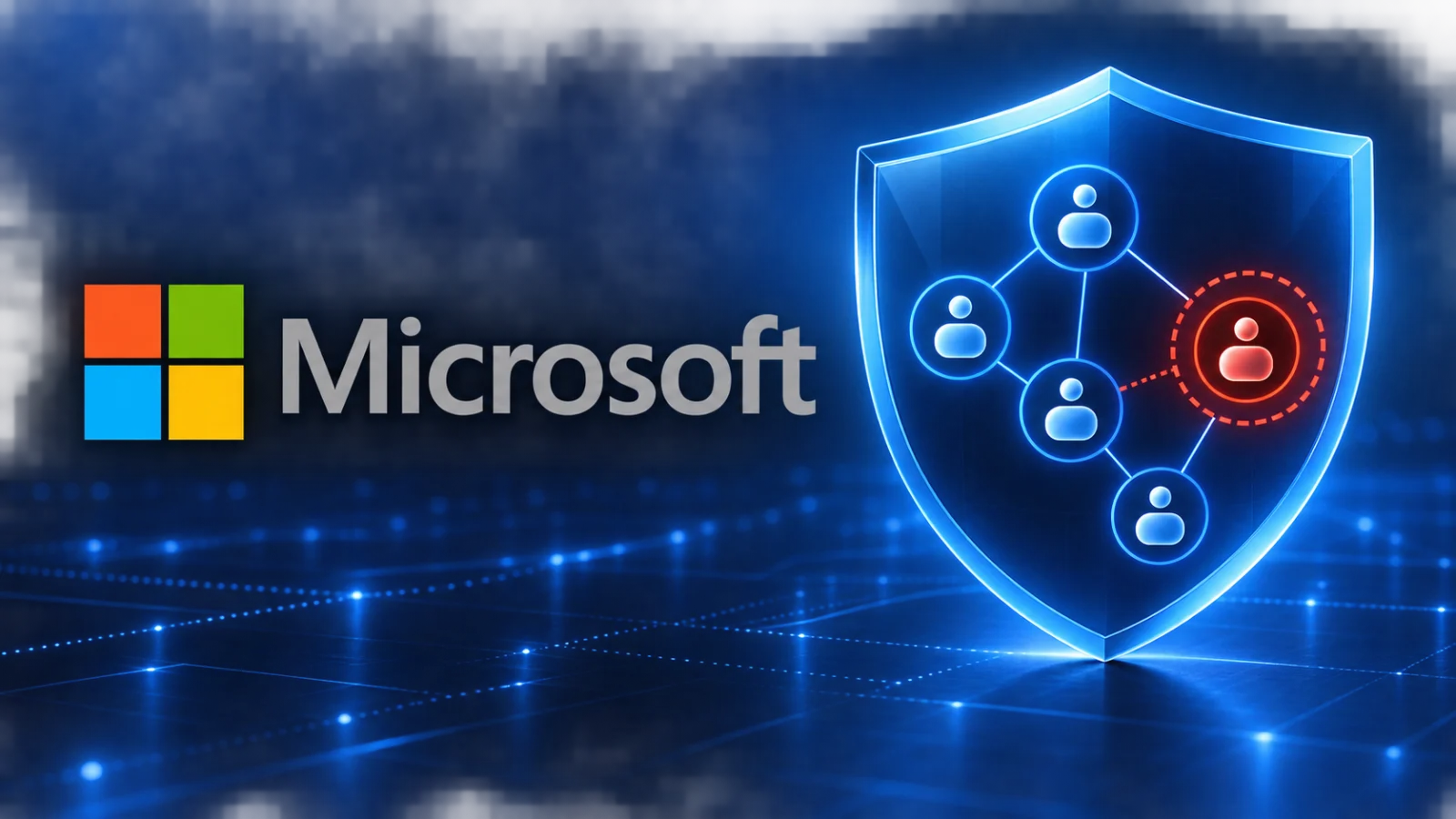
Microsoft has adopted a blunt security model for the agent era: an AI agent is an insider. It may not be malicious, but it can read files, inherit credentials, call tools and change systems at machine speed. If companies give it an employee’s broad identity and rely on logs after the fact, the security design is already behind the risk.
The company’s expanded Project Perception proposes a different control plane. Discover local agents, assign them distinct identities, reduce permissions to the current task, watch behavior continuously, and block or isolate activity when risk changes. Microsoft says its discovery coverage now reaches 60 types of local agents, including OpenAI Codex, Claude Code and GitHub Copilot.
The idea is stronger than “trust the model,” but much of the product stack is still in preview or staged availability. Organizations should treat Microsoft’s announcement as a practical architecture pattern first and a finished universal solution second.
Why an agent is different from a normal application
A conventional application usually follows predefined code paths. An agent interprets goals, reads untrusted content, chooses tools and decides what to do next. The same flexibility that makes it useful also makes permissions difficult to predict.
Consider a coding agent with access to a repository, shell, package registry and cloud console. A malicious instruction hidden in an issue, document or dependency could persuade it to reveal a secret or modify deployment settings. The agent may act through the developer’s account, making the audit trail look like a legitimate employee action.
This is why model-level refusal rules are insufficient. The model can misunderstand context, tools can be compromised, and prompts can arrive from outside the trust boundary. Security must constrain what the agent can do even when its reasoning fails.
Microsoft’s four-layer answer
Discovery comes first. A company cannot govern agents it does not know exist. Microsoft says Project Perception can identify dozens of local agent types, including popular coding assistants. This targets shadow AI: employees installing tools that can access sensitive work without a central inventory.
Each agent gets its own identity. Microsoft Entra Agent ID is intended to separate an agent from the human who created or invoked it. That distinction improves ownership, policy and auditing. A log should say which agent performed an action, for which person and under which authorization—not merely show the employee’s account.
Permissions become task-scoped and dynamic. An expense agent may need to read one receipt and create one draft record, not browse every finance folder indefinitely. Microsoft describes controls that adjust access during execution as risk changes. This moves least privilege from a static role to a short-lived task boundary.
Containment happens while the task is running. Write actions can be blocked, sessions isolated and suspicious behavior investigated by Guardian Agents. The goal is to intervene before an agent completes a harmful chain, rather than reconstruct the incident after data has moved.
A minimum design for teams using coding agents
Microsoft’s product names are optional; the control principles are not. Start by giving every production agent a separate service identity. Never let an unattended agent reuse a developer’s full interactive session if a narrower credential can do the job.
Issue short-lived credentials for the current task. Restrict repositories, branches, file paths, commands, network destinations and cloud resources. Require human approval before secrets are read, packages are published, money is spent, production is changed or external messages are sent.
Run risky tools in a sandbox and deny outbound network access by default. An agent that can read a private repository should not also be able to upload arbitrary data to any domain. Allow only the package registries, APIs and deployment endpoints required for the task.
Finally, capture an attributable audit trail: agent identity, initiating human, task, model, tools, permissions, inputs, outputs and approvals. Logs must redact secrets and remain outside the agent’s ability to alter them.
Where the new controls can fail
Discovery coverage is never complete. An agent can appear as a script, browser extension, IDE plugin or custom internal tool. Supporting 60 named agents is useful, but inventory also needs behavioral detection and software-management controls.
Dynamic permission systems can create alert fatigue or block legitimate work. If teams override warnings routinely, the control becomes ceremonial. Policies need staged deployment, clear high-risk actions and measurable false-positive rates.
Guardian Agents introduce another question: who watches the watcher? A defensive agent may inspect prompts, files and reasoning signals that contain sensitive employee or customer data. Organizations need retention limits, access controls and transparency around what is analyzed. Microsoft’s announcement does not remove those privacy and governance obligations.
Availability is also a constraint. Some capabilities are preview features, and complete pricing or general-availability timing is not yet public. Buyers should verify exactly which controls work for local agents, third-party clouds and non-Microsoft identity systems before treating the architecture diagram as deployed protection.
The larger shift: secure the action, not only the model
Early AI safety focused on whether a chatbot would produce prohibited text. Agent safety is increasingly about whether software can execute a consequential action with the wrong authority. That shifts responsibility toward identity, authorization, isolation, monitoring and recovery—the same disciplines used for human insiders and service accounts, adapted to faster and less predictable actors.
The useful question is no longer “Is this model trustworthy?” It is “What is the maximum damage this task can cause if the model is wrong?” A well-designed system can tolerate a bad suggestion because the agent lacks permission to publish, transfer or delete without an independent gate.
Verdict
Microsoft’s “newest insider” framing is accurate and overdue. Agents work inside the organization, use legitimate tools and can cause harm without looking like an external attacker. Separate identities, task-level permissions and real-time containment are the right foundation.
The announcement is not proof that every agent is now safely governed. Coverage, preview status, privacy and cross-platform enforcement still need testing. But companies do not need to wait for a complete product suite to adopt the core rule: never give an AI agent more durable authority than the smallest task requires.
Sources
> Want more like this?
Get the best AI insights delivered weekly.
By subscribing, you agree to our Privacy Policy. You can unsubscribe at any time.
> Related Articles
One Line of Code to Trainium: Can Amazon Cross CUDA's Moat?
TorchNeuron promises to run existing PyTorch code on AWS Trainium with almost no rewrite. We examine whether it can reduce the software migration cost behind CUDA's moat.
1,068 Tokens Per Second: Can Mercury 3 Change How LLMs Generate Text?
A diffusion LLM has crossed the 1,000-token-per-second mark by refining multiple positions at once. We separate the speed and price claims from the quality evidence still missing.
Anthropic은 왜 회사 지분 5%를 공익기금에 넣었을까?
Anthropic이 공익기금에 배정하겠다고 한 것은 현금이 아니라 비상장 회사 지분이다. 5%의 잠재력과 주주 승인·현금화·지배구조라는 조건을 분석한다.
Most Read



Latest News
Tags
> Stay in the loop
Weekly AI tools & insights.