Meta SparkMuse 공개 모델 등장…Mac Studio 두 대면 집에서 영원히 무료?
Meta의 816B 오픈웨이트 모델은 두 대의 고급 Mac Studio에서 로컬 실행할 수 있다. API 요금은 사라지지만 하드웨어·전기·운영비까지 무료가 되는 것은 아니다.
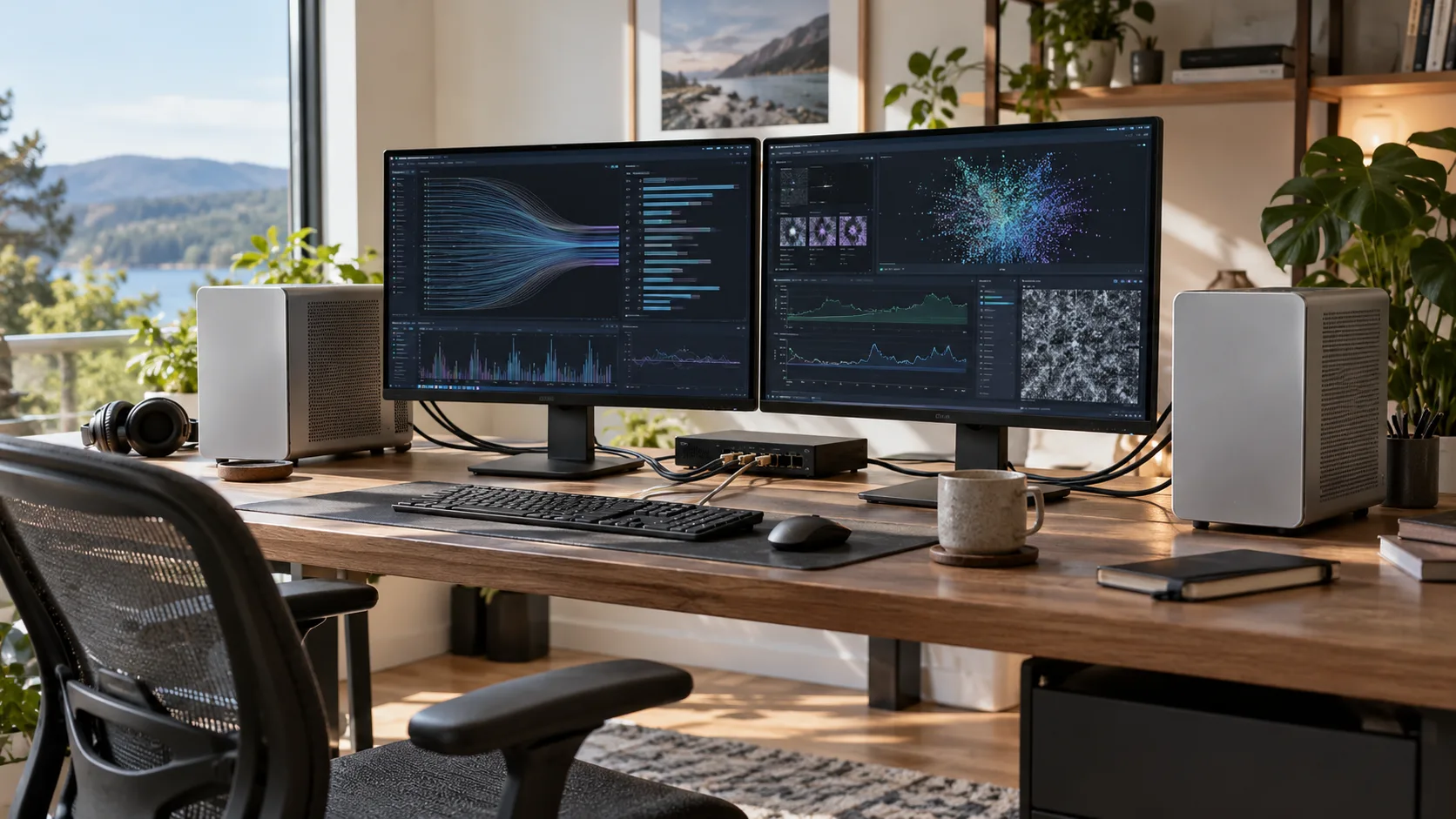
Meta has released the weights for Muse Spark Open, an 816-billion-parameter multimodal model that can reportedly run across two high-end Mac Studio machines. That makes the headline’s promise partly true: once the hardware is bought, there is no per-token API bill. It does not make the system literally free forever. The computers, storage, electricity, cooling, networking, maintenance, and time required to operate it remain real costs.
The model is a mixture-of-experts system with 816 billion total parameters but 42 billion active for each token. That distinction is crucial. A dense 816B model would require vastly more computation for every response. Muse Spark Open keeps a huge pool of specialized parameters while activating only a fraction during inference, making local deployment less impossible than the headline number suggests.
What Meta actually opened
The official model card describes Muse Spark Open as an open-weights model with a one-million-token context window and native support for text, images, audio, and video. The release includes full-precision and lower-precision weight options, while the surrounding ecosystem is adding support through MLX, vLLM, and SGLang.
Open weights does not automatically mean open source in the broadest sense. Users receive model parameters and deployment tooling, but the release remains governed by Meta’s Muse Model License. Training data, the complete training recipe, and every internal safety decision are not reproduced merely because the checkpoint can be downloaded.
That makes the model useful for organizations that want to inspect deployment behavior, keep sensitive prompts on their own network, or avoid sending every request to a hosted API. It does not guarantee that every use is unrestricted or that an outside team can independently recreate the model.
Why two Mac Studios can be enough
The relevant Mac Studio configuration is not an ordinary desktop. The local setup relies on two premium systems with very large unified-memory pools, fast interconnects, and software optimized to split the model across both machines. The phrase “runs on two Macs” hides the importance of memory capacity and quantization.
The model’s active parameter count reduces compute per generated token, but all required weights still need to be stored and moved efficiently. Lower-precision weights reduce the memory burden. Even then, a pair of top configurations can cost as much as a substantial server, and performance will depend on context length, input modality, quantization, and networking.
This is therefore a proof that frontier-scale local inference is becoming accessible to small laboratories and well-funded enthusiasts—not proof that any consumer MacBook can run an 816B model.
Is local use really “free forever”?
The best interpretation is zero marginal API price, not zero total cost. A hosted model charges for each input and output token. A local system converts that variable bill into capital and operating expenses.
For a team with constant utilization, sensitive data, or a need for predictable capacity, that trade can be attractive. For an individual who asks a few questions per day, buying two flagship workstations will almost certainly cost more than using an API for years.
Electricity also matters. Long sessions at high utilization consume power continuously, and the machines still have an opportunity cost when they are idle. Storage for multiple checkpoints, backups, software updates, and monitoring add further expense. Hardware eventually depreciates, while hosted providers absorb replacement and maintenance themselves.
What local ownership changes
The strongest benefit is control. Prompts, images, audio, and documents can remain on premises. Organizations can pin a version rather than accepting a provider’s silent model update. They can profile latency, apply custom safety controls, and keep working even if an external API changes price or availability.
The responsibility also shifts inward. The operator must secure the model server, manage access, monitor abuse, apply patches, and decide how outputs are logged. A local model is not private merely because it is physically nearby; a poorly configured service can still expose data to a network or another user.
Who should consider it
Two-machine deployment makes sense for research teams testing open models, studios processing sensitive media, companies with sustained inference loads, and developers who need complete control over a checkpoint. It is less persuasive for casual use, bursty workloads, or teams without staff to maintain the system.
Before buying hardware, estimate monthly token volume, acceptable latency, memory needs at the intended precision, power cost, and staff time. Compare that full amount with several hosted APIs—not only with the most expensive frontier endpoint.
Verdict
Muse Spark Open is a meaningful local-AI milestone. An 816B-total, 42B-active multimodal model running on two desktop-class systems would have sounded unrealistic not long ago. The release expands what independent teams can operate without renting a large GPU cluster.
But “free forever” is a provocative shorthand. The accurate claim is that local inference can eliminate recurring token fees after a very large upfront investment. For heavy, privacy-sensitive workloads, that may be a good bargain. For everyone else, the two Mac Studios are not a loophole around AI economics—they are the bill paid in advance.
Sources
> Want more like this?
Get the best AI insights delivered weekly.
By subscribing, you agree to our Privacy Policy. You can unsubscribe at any time.
> Related Articles
GitHub가 PR을 AI 검사한다…그런데 위험해도 병합은 안 막는다?
GitHub AI Scan은 CodeQL이 다루지 못하는 변경을 검사하고 수정안도 제시한다. 하지만 결과는 참고용이며 규칙셋으로 병합을 차단할 수 없다.
209M 모델이 대형 예측 AI를 이겼다? Mistral Timestral의 미확인점
Timestral-209M은 세 공개 시계열 벤치마크에서 선두를 주장하며 CPU에서도 실행된다. 하지만 기술보고서와 실제 산업 데이터 검증은 아직 남아 있다.
Can Google AI Studio Really Install an Android App From a Prompt?
Google now lets people generate, test, and install native Android projects from AI Studio. The workflow is real, but deployment, security, and source ownership still require human judgment.
Most Read

Latest News
- GitHub가 PR을 AI 검사한다…그런데 위험해도 병합은 안 막는다?
- 209M 모델이 대형 예측 AI를 이겼다? Mistral Timestral의 미확인점
- Can Google AI Studio Really Install an Android App From a Prompt?
- GPT-4o API Shuts Down in Three Months—Will Delaying Really Break Your Service?
- What Breaks When 10,000 AI Agents Run for 48 Hours?
- Did Seven People Replace Git in Five Months? What Anthropic's Internal Numbers Really Mean
Tags
> Stay in the loop
Weekly AI tools & insights.