Anthropic은 왜 회사 지분 5%를 공익기금에 넣었을까?
Anthropic이 공익기금에 배정하겠다고 한 것은 현금이 아니라 비상장 회사 지분이다. 5%의 잠재력과 주주 승인·현금화·지배구조라는 조건을 분석한다.
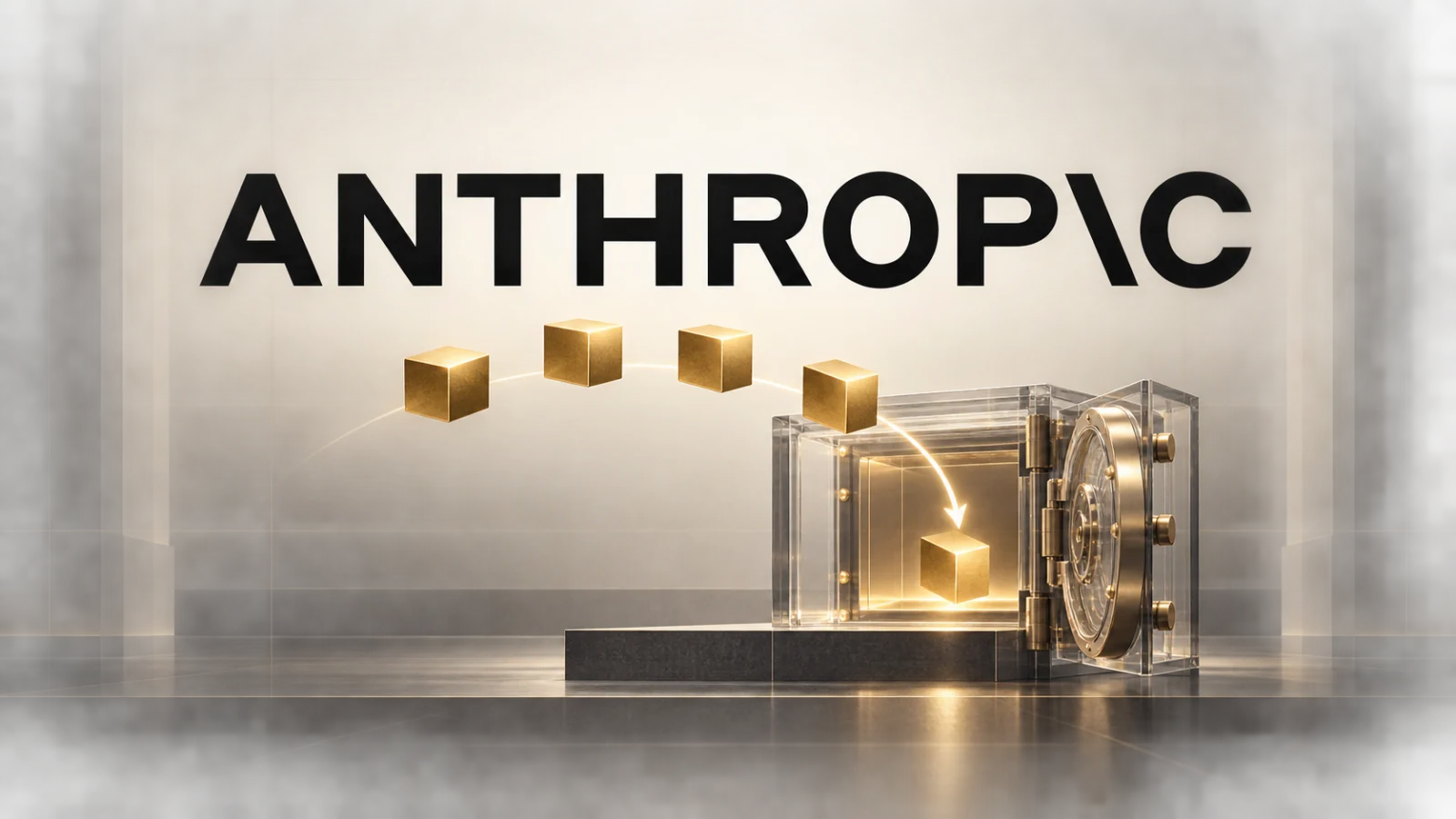
Anthropic says it will allocate 5% of the company to a new Public Benefit Fund, subject to stockholder approval. The headline sounds like an enormous cash donation. It is not. The commitment is private-company equity placed into a company-owned structure whose eventual public value will depend on valuation, liquidity, governance, and how the shares are converted into money or programs.
That does not make the commitment meaningless. If Anthropic’s value continues to rise, a 5% stake could finance social programs at a scale rarely seen from a technology company. But the size cannot be responsibly measured in dollars until the company discloses more about the approved share pool, valuation baseline, dilution, sale rules, and timing.
What Anthropic announced
The company says the fund is intended to support responses to AI’s social effects, including disruption to employment. The initial allocation requires shareholder approval. Anthropic also says its board may add another 2% at its discretion each time the company’s valuation increases 50% above a defined baseline.
The word “may” is important. The initial 5% is a proposed commitment with an approval condition. The additional tranches are not automatic obligations; they depend on valuation thresholds and board decisions. Readers should separate the fixed-looking headline from the conditional mechanisms beneath it.
The fund is also not described as an independent outside charity. Reporting identifies it as a wholly owned entity within Anthropic’s corporate structure. That can make administration easier and align resources with the company’s stated mission, but it also creates an obvious governance question: how independent can decisions be when the company that caused or benefited from the disruption still owns the institution distributing relief?
Why equity instead of cash
An equity commitment lets a fast-growing private company promise a share of future upside without draining current operating cash. If the business becomes substantially more valuable, the fund participates in that growth. This links the scale of social spending to the scale of the company creating the technology.
It also shifts risk to the fund. Private shares do not pay a utility bill or finance retraining on demand. They must be sold, redeemed, borrowed against, or converted during a liquidity event. Their paper value can rise sharply and fall sharply. Restrictions on transfer, investor rights, dilution, and tax treatment can all change what beneficiaries ultimately receive.
For that reason, “5% of the company” and “5% of today’s valuation in cash” are not interchangeable claims. A fair article should describe this as potentially valuable equity, not money already distributed.
The labor-market logic
Anthropic has repeatedly argued that advanced AI could reshape skilled work. A fund aimed at employment shock is an attempt to connect the producer’s upside with the transition costs borne by workers and communities. Possible uses could include retraining, wage insurance, local economic support, research, or public-interest institutions, although the actual programs and beneficiary rules need to be specified.
The model differs from a conventional year-end donation. It resembles a permanent claim on corporate value that can grow alongside adoption. If designed well, it could last longer than a publicity cycle and provide resources exactly when automation effects become more visible.
But corporate discretion can also turn a structural promise into selective philanthropy. Workers affected by AI may not be in the regions, professions, or programs a company prefers to fund. Public policy and labor protections cannot be replaced by a private board choosing worthy recipients.
Five disclosures needed before pricing the promise
First, define the valuation baseline. The rule for potential additional 2% allocations cannot be assessed without knowing the baseline and how future valuations are calculated.
Second, explain dilution. Is the fund protected if Anthropic issues more shares, raises new rounds, or restructures? Five percent today can become a smaller effective claim tomorrow.
Third, publish liquidity rules. Who decides when shares can be sold, to whom, and under what restrictions? A large paper stake is not useful if it cannot finance programs when needed.
Fourth, establish independent governance. The fund needs published criteria, conflict-of-interest rules, external trustees or reviewers, audited accounts, and a process for affected communities to influence decisions.
Fifth, report outcomes rather than commitments. Annual disclosure should show the value transferred, money deployed, recipients, administrative costs, measurable results, and rejected applications. A percentage announcement is an input, not an impact metric.
Could this become a model for other AI companies?
The mechanism has an attractive principle: reserve part of the producer’s ownership for the public costs associated with its success. It could be copied by other high-growth AI firms before their equity becomes liquid, embedding social participation earlier than a founder’s later charitable pledge.
The risk is that voluntary funds become a substitute for taxes, labor rules, competition policy, or democratic decisions about automation. A corporate fund can experiment quickly, but it is accountable primarily through its own charter unless stronger safeguards are built in. The best outcome would be complementary: private capital supporting urgent experiments while public institutions set rights and durable protections.
Verdict
Anthropic’s 5% pledge is potentially significant precisely because it is equity, not a one-time cash donation. It shares some future upside with a vehicle intended to address AI’s social effects. Yet that same structure makes the headline impossible to value today.
The responsible judgment is conditional. Approve the shares, protect the stake from dilution, create independent governance, define liquidity, and publish outcomes—then the fund could become a serious institution. Until those details exist, “5%” is a promising ownership commitment, not proof that affected workers have already received compensation.
Sources
> Want more like this?
Get the best AI insights delivered weekly.
By subscribing, you agree to our Privacy Policy. You can unsubscribe at any time.
> Related Articles
가격은 그대로, 코딩 성능은 개선—DeepSeek V4.1 Flash 1017의 실력은?
API 가격은 유지됐지만 코딩·에이전트 성능은 개선됐다. 다만 510GB급 체크포인트와 제작사 벤치마크를 감안하면 로컬 운용의 현실은 단순하지 않다.
OpenCode를 썼다면 API 키부터 확인해야 할까? 침해 범위와 대응법
OpenCode 전체가 아니라 Console 이용자 일부가 영향을 받았다. 외부 AI 공급자 키를 연결했다면 지금 확인할 범위와 비용 피해를 줄이는 대응 순서를 정리했다.
Anthropic은 공개를 막지 않는다—다만 무엇이 기밀인지는 결정한다
METR 평가자 6명은 Anthropic 내부 도구와 장비에 직원급으로 접근하고 승인 없이 결과를 발표할 수 있다. 그러나 기밀 범주 판단권은 평가 대상 기업에 남아 있다.
Most Read





Latest News
Tags
> Stay in the loop
Weekly AI tools & insights.