AI Customer Support Tools: Intercom vs Zendesk AI vs Ada — The Bot Battle
Cutting through the AI customer support noise: Intercom Fin, Zendesk AI, and Ada face off. Discover which bot truly delivers resolution, cuts costs, and scales with your business.
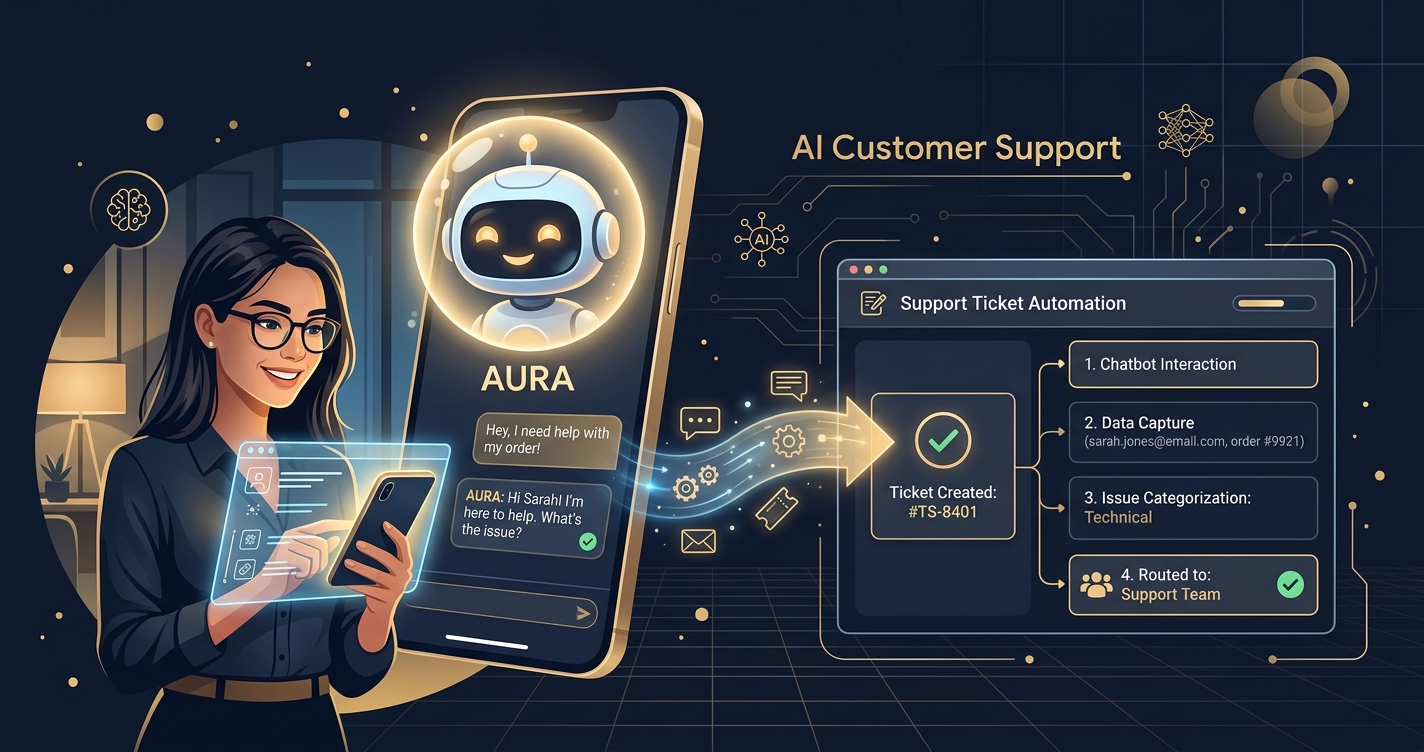
The customer support landscape is no longer about cheerful humans answering calls. It’s a full-blown AI arms race, and your business is either arming up or getting left in the dust. Forget “digital transformation” buzzwords; we’re talking about tangible, measurable improvements in resolution rates, cost reduction, and customer satisfaction. The bots are here, and they’re not just for FAQs anymore.
Today, we’re throwing three heavyweights into the ring: Intercom Fin, Zendesk AI, and Ada. These aren’t just chatbot plugins; they’re sophisticated AI engines designed to handle, deflect, and even predict customer queries with startling accuracy. We’re cutting through the marketing fluff to tell you what each platform actually delivers, where it shines, and where it might leave you wanting. This isn’t a beauty contest; it’s a battle for your bottom line.
Let’s get direct.
What is Intercom Fin and How Does It Claim to Revolutionize Support?
Intercom Fin isn’t just another feature tacked onto a bloated platform; it’s Intercom’s direct shot at autonomous customer support. Positioned as a “GPT-4 powered bot,” Fin promises to deliver human-like support, instant resolutions, and significant cost savings by learning from your existing knowledge base and past conversations. The claim? Deflect up to 50% of common questions without human intervention. That’s a bold statement, and if true, it’s a major change.
How Does Fin Actually Work Under the Hood?
At its core, Fin leverages large language models (LLMs), specifically GPT-4, to understand nuanced customer queries, even when phrased imperfectly. It doesn’t just match keywords; it comprehends intent.
- Dynamic Answer Generation: Instead of static, pre-written responses, Fin synthesizes answers from your help center articles, support tickets, and even product documentation in real-time. This means it can tackle novel questions without explicit programming for every scenario.
- Proactive Engagement: Fin can identify user friction points within your product or website and proactively offer assistance, guiding users before they even formulate a question. This shifts support from reactive to truly proactive.
- Seamless Hand-off: When Fin can’t resolve an issue, it collects relevant context and seamlessly transfers the conversation to a human agent, ensuring the agent doesn’t start from scratch. This is crucial; no one wants to repeat themselves to a bot, then again to a human.
- AI-Powered Summaries: For human agents, Fin provides AI-generated summaries of complex conversations, cutting down on “read time” and speeding up resolution for intricate cases.
What Are Fin’s Key Strengths for Modern Businesses?
Intercom Fin’s strength lies in its tight integration with the Intercom platform and its focus on intuitive, real-time engagement.
- Ease of Setup and Training: For existing Intercom users, activating Fin is remarkably straightforward. It ingests your existing data, making the training process relatively quick and painless compared to traditional bot builders. No complex flowcharts or extensive coding required.
- Natural Language Understanding: Thanks to GPT-4, Fin excels at interpreting natural, conversational language, making interactions feel less like talking to a robot and more like a (highly informed) assistant. This reduces customer frustration significantly.
- Unified Platform Experience: If you’re already using Intercom for messaging, live chat, and email support, Fin slots in perfectly, creating a single source of truth for all customer interactions. This avoids data silos and streamlines operations.
- Reported Resolution Rates: Intercom touts impressive self-serve resolution rates with Fin. For instance, Ravelin, a fraud detection platform, reported a 45% resolution rate with Fin, allowing their team to focus on more complex, high-value cases. This translates directly to reduced operational costs.
Where Does Intercom Fin Fall Short?
While powerful, Fin isn’t a silver bullet.
- Intercom Ecosystem Lock-in: Fin’s true power is unleashed within the Intercom ecosystem. If you’re not an existing Intercom user, adopting Fin means adopting Intercom’s entire suite, which might be overkill or redundant if you have other established tools.
- Reliance on Data Quality: Fin is only as good as the data it’s trained on. If your knowledge base is outdated, inconsistent, or poorly structured, Fin will reflect those deficiencies, leading to inaccurate or unhelpful responses. Garbage in, garbage out, even with GPT-4.
- Customization Depth: While excellent for general purpose support, deep, highly specialized workflow automation or complex integrations outside of Intercom’s native capabilities might require more bespoke solutions. It’s an intelligent generalist, not necessarily a hyper-specialized expert.
Is Zendesk AI More Than Just a Feature Set?
Zendesk has been a staple in customer service for years, evolving from a simple ticketing system to a comprehensive CX suite. Their embrace of AI isn’t a sudden pivot but a natural extension of their existing offerings, integrating AI across various touchpoints. Zendesk AI isn’t a single product; it’s an intelligent layer woven into their entire platform, aiming to make every interaction smarter, faster, and more efficient.
What AI Capabilities Does Zendesk Bring to the Table?
Zendesk’s AI capabilities are broad, designed to augment both the customer and agent experience.
- Answer Bot: This is Zendesk’s primary self-service AI tool, capable of automatically answering common questions by drawing from your knowledge base. It learns and improves over time, reducing the load on human agents.
- Intelligent Routing: Zendesk AI can analyze incoming tickets, classify their intent, and automatically route them to the most appropriate agent or department. This ensures faster initial response times and higher resolution rates by getting the ticket to the right person from the start.
- Sentiment Analysis: By analyzing the tone and language of customer interactions, Zendesk AI can flag conversations showing negative sentiment, allowing agents to prioritize and de-escalate potentially problematic situations before they escalate.
- Agent Assist Tools: For human agents, Zendesk provides AI-powered suggestions for responses, relevant knowledge base articles, and macros. This speeds up response times and helps maintain consistency across the support team.
- Prediction and Proactivity: Zendesk can predict customer needs or potential churn based on historical data and interaction patterns, enabling proactive outreach or problem-solving.
Why Do Businesses Choose Zendesk AI for Scalability?
Zendesk’s long-standing presence and comprehensive platform make its AI offering particularly appealing for organizations seeking end-to-end solutions.
- Holistic CX Platform: For businesses already deeply invested in Zendesk for ticketing, CRM, and omnichannel support, integrating Zendesk AI is a logical step. It leverages existing infrastructure and data, providing a unified view of the customer journey.
- Robust Analytics and Reporting: Zendesk is known for its powerful analytics. The AI capabilities feed into this, offering insights into deflection rates, bot performance, agent efficiency, and customer satisfaction, allowing for continuous optimization.
- Enterprise-Grade Capabilities: Zendesk is built to handle large volumes and complex organizational structures. Its AI tools are designed with scalability in mind, making it suitable for growing businesses and large enterprises with diverse support needs.
- Proven Track Record: Zendesk boasts numerous success stories. Mailchimp, for example, used Zendesk’s AI to deflect 40% of their email volume, significantly reducing their support backlog. This kind of verifiable impact is compelling.
What Are the Common Criticisms of Zendesk AI?
While powerful, Zendesk AI comes with its own set of challenges.
- Complexity and Learning Curve: The sheer breadth of Zendesk’s platform can be overwhelming. Implementing and optimizing its AI features, especially for advanced use cases, can require significant time and expertise. It’s not always a “set it and forget it” solution.
- Pricing Structure: Zendesk’s pricing can get complex, with various tiers, add-ons, and per-agent costs. While powerful, the full suite with advanced AI features can become quite expensive, particularly for smaller businesses. Understanding the exact cost for your specific needs requires careful consultation.
- Customization Limitations: While flexible, deep customization of bot flows or integration with highly niche internal systems might require developer resources or reliance on the Zendesk marketplace, which can add costs and complexity.
Why is Ada Considered the AI-First Contender?
Ada enters the arena with a singular focus: autonomous customer experience. Unlike Intercom or Zendesk, which started as broader CX platforms and integrated AI, Ada was built from the ground up as an AI-powered chatbot solution. This “AI-first” philosophy means every aspect of the platform is designed to maximize automation, personalization, and self-service, often without human intervention. Ada aims not just to assist agents but to replace conversations where possible.
How Does Ada’s Autonomous CX Platform Deliver Results?
Ada distinguishes itself through its dedication to complete automation and hyper-personalization.
- No-Code Bot Builder: Ada provides an intuitive, no-code interface for building sophisticated chatbot flows. This empowers non-technical teams to design and deploy complex customer journeys without relying on developers.
- Deep Personalization and Context: Ada leverages customer data from integrated systems (CRM, marketing platforms) to deliver highly personalized interactions. It remembers past conversations, understands customer segments, and can tailor responses, offers, and even proactive outreach.
- Proactive Engagement and Campaigns: Beyond reactive support, Ada can initiate conversations based on user behavior, product usage, or predefined triggers, guiding customers through onboarding, troubleshooting, or promotional offers.
- Multilingual Support: Ada offers robust multilingual capabilities, allowing businesses to serve a global customer base with localized, AI-powered support, often out-of-the-box.
- Integration Flexibility: While focused on automation, Ada is designed to integrate seamlessly with various CRMs, ticketing systems, and backend services via APIs and pre-built connectors, ensuring data flows efficiently.
What Makes Ada Stand Out in Automation and Personalization?
Ada’s commitment to automation and personalization is its primary differentiator.
- High Automation Rates: Ada consistently reports some of the highest automation rates in the industry. Wealthsimple, a financial services company, achieved an 80% automation rate with Ada, significantly freeing up their human agents. This level of deflection is a serious cost-saver.
- Intent Recognition Prowess: Ada’s AI is particularly strong at discerning user intent, even with ambiguous or varied phrasing. This minimizes “I don’t understand” responses and guides customers more effectively.
- Focus on CX Outcomes: Ada’s platform is geared towards measurable CX outcomes: increased automation, reduced wait times, higher customer satisfaction, and improved operational efficiency. Their analytics dashboard reflects this focus.
- Scalability for Complex Use Cases: Despite its no-code interface, Ada can handle intricate customer journeys and integrations, making it suitable for businesses with complex products or services that require deep, intelligent automation.
What Are Ada’s Potential Drawbacks for Businesses?
The “AI-first” approach has its trade-offs.
- Pricing Model: Ada is a premium solution, and its pricing reflects its advanced capabilities and focus on high automation. It’s generally more expensive than entry-level offerings from Intercom or Zendesk, making it a bigger investment, especially for smaller businesses.
- Not a Full CX Suite: Unlike Intercom or Zendesk, Ada is primarily an automation platform. While it integrates with ticketing systems, it doesn’t offer native live chat, email management, or full CRM functionalities. You’ll likely need to pair it with other tools.
- Learning Curve for Advanced Features: While the no-code builder is intuitive, unlocking Ada’s full power for complex, highly personalized flows still requires a strategic approach and understanding of its specific logic. It’s not just “type questions, get answers.”
Which Bot Wins on Resolution Rates and Efficiency?
This is where the rubber meets the road. All three claim high resolution rates, but it’s crucial to understand the context.
- Ada: Often leads the pack in automation rate, meaning the percentage of queries resolved entirely by the bot without human intervention. Its dedicated AI focus allows it to push the boundaries here, with reported figures often in the 70-80% range for specific use cases (e.g., Wealthsimple’s 80% automation rate). This is Ada’s primary value proposition.
- Intercom Fin: Aims for high self-serve resolution and deflection. While not always as high as Ada’s automation, Fin integrates seamlessly with human agents for complex issues. Ravelin saw a 45% resolution rate for basic inquiries, allowing agents to focus on strategic tasks. Fin’s strength is the smooth blend of AI and human.
- Zendesk AI: Focuses on overall efficiency by augmenting both self-service (Answer Bot) and agent-assisted resolutions. Mailchimp’s 40% email deflection highlights its ability to reduce agent workload, contributing to faster overall resolution times across the entire support ecosystem.
Verdict: If your primary goal is to maximize pure bot automation and deflect the highest possible percentage of queries, Ada often has the edge. If you want a powerful AI that works seamlessly with and enhances your existing human agents and Intercom setup, Fin is incredibly effective. Zendesk AI offers a comprehensive approach to boost efficiency across all channels within a large-scale CX operation.
How Do Setup Complexity and Customization Compare?
Getting these bots up and running is another critical factor.
- Intercom Fin: Generally the easiest to deploy, especially for existing Intercom users. It largely “learns” from your existing help center and conversation history, minimizing manual configuration. Customization is mainly about refining its knowledge sources and hand-off rules.
- Ada: Offers an intuitive no-code builder, making it accessible for non-technical teams to create complex flows. However, building truly sophisticated, highly personalized bot experiences requires careful planning and a deep understanding of its logic, which can be a learning curve for advanced use cases.
- Zendesk AI: Being part of a larger, more complex platform, setting up and optimizing Zendesk AI features can be more involved. While it has user-friendly elements, leveraging its full suite of AI capabilities (intelligent routing, sentiment analysis, Answer Bot) often requires more configuration and integration work.
Verdict: Intercom Fin is arguably the quickest to get functional. Ada offers immense power with a no-code interface but requires more strategic design for advanced customization. Zendesk AI, while powerful, often demands a more significant upfront investment in configuration due to its comprehensive nature.
What’s the Real Cost of AI Support: Pricing Showdown?
Pricing is rarely straightforward with enterprise software, and AI support tools are no exception. All three operate on tiered models, often with usage-based components.
- Intercom Fin: Part of Intercom’s broader platform. Its pricing is typically based on the number of active users (customers) and agents. Fin itself is an add-on to their core plans (which start from around $74/month for basic features). The more advanced AI features are usually locked into higher-tier plans, meaning a significant investment to unlock its full potential. Expect costs to scale with your customer base and the complexity of your support needs.
- Zendesk AI: Integrated across Zendesk’s service plans, which are typically priced per agent per month. Basic AI features (like Answer Bot) might be included in mid-tier plans (e.g.,
Suite Growthstarting at around $79/agent/month), while more advanced capabilities (sentiment analysis, intelligent routing) might be in higher tiers (Suite ProfessionalorEnterprise, often $99-$150+/agent/month) or as separate add-ons. Their structure can quickly add up for larger teams or advanced needs. - Ada: Positions itself as a premium, AI-first solution, and its pricing reflects that. Ada generally uses a conversations-based model, meaning you pay per automated interaction. While they don’t publish specific prices, it’s widely known to be a more substantial investment than entry-level options from the others, often requiring custom quotes. It’s built for businesses serious about achieving high automation and ROI.
Verdict: There’s no single “cheapest” option, as it heavily depends on your scale, desired features, and usage.
- Intercom Fin offers value if you’re already in their ecosystem and want seamless AI integration without massive upfront bot-building costs.
- Zendesk AI is cost-effective if you need a comprehensive CX suite and want AI woven throughout your agent workflows.
- Ada is a serious investment for businesses prioritizing maximum automation and personalization, expecting significant ROI through deflection. Always get a custom quote and understand the “per conversation” or “per agent” metrics.
Can These Bots Play Nicely? Integration Capabilities Explored.
No AI bot lives in a vacuum. Integration with your existing tech stack is non-negotiable.
- Intercom Fin: Naturally excels within the Intercom ecosystem, integrating seamlessly with their CRM, live chat, and email. It also offers a range of pre-built integrations with popular tools (Stripe, Salesforce, HubSpot, etc.) and an API for custom connections.
- Zendesk AI: As a veteran CX platform, Zendesk boasts extensive integration capabilities. It integrates tightly with its own CRM, sales, and marketing tools. Its marketplace is vast, offering hundreds of pre-built connectors to third-party apps, and a robust API for custom development.
- Ada: Designed to be the “automation layer” that connects to your existing systems. It offers a wide array of pre-built integrations with popular CRMs (Salesforce, HubSpot), ticketing systems (Zendesk, Intercom), and other business tools. Its API is comprehensive, allowing for deep, custom integrations to pull and push data for hyper-personalization.
Verdict: All three offer strong integration capabilities.
- Intercom Fin is king for native Intercom users.
- Zendesk AI wins on the sheer breadth of its marketplace and native integrations within its own vast suite.
- Ada provides excellent flexibility for connecting to any system, making it a strong choice if you have a diverse or specialized tech stack.
AI Customer Support Tools: The Bot Battle Comparison Table
| Feature / Platform | Intercom Fin | Zendesk AI | Ada |
|---|---|---|---|
| Core Focus | AI-powered conversational support & agent assist | AI augmentation across full CX suite | Autonomous customer experience (AI-first automation) |
| Primary AI Tech | GPT-4 powered LLM | Proprietary AI, LLM integrations | Proprietary AI, NLP, Machine Learning |
| Resolution Rate Claims | ~45% deflection for common queries (Ravelin) | ~40% email deflection (Mailchimp) | Up to 80% automation rate (Wealthsimple) |
| Setup Complexity | Low (especially for existing Intercom users) | Medium-High (part of complex CX suite) | Medium (no-code builder, but complex flows need planning) |
| Customization | Good (knowledge base refinement, basic flows) | Excellent (extensive options, dev-friendly API) | Excellent (deep personalization, complex no-code flows) |
| Pricing Model | Add-on to Intercom plans (per user/agent) | Per agent/month, tiered, feature-gated | Conversation-based model (premium, custom quotes) |
| Ideal For | Intercom users, mid-market, fast setup, blended AI+human | Large enterprises, existing Zendesk users, omnichannel needs | High-volume automation, deep personalization, AI-first strategy |
| Key Strength | Seamless integration, natural language, quick ROI | Comprehensive suite, robust analytics, scalability | Max automation, intent recognition, proactive CX |
| Key Weakness | Intercom ecosystem lock-in, less dev-centric | Potential complexity, higher base cost | Premium pricing, not a full CX suite, learning curve |
So, Which AI Bot Should You Bet On?
Choosing the right AI customer support tool isn’t about picking the “best” in a vacuum; it’s about picking the best fit for your business, your existing tech stack, and your strategic goals. No fluff, just facts:
Define Your Problem, Not Just Your Tool.
Before you even look at features, understand your core pain points. Are you drowning in repetitive questions? Is your first response time abysmal? Are agents burning out on simple tasks?
- If you need a quick, intelligent boost to your existing Intercom support: Intercom Fin is your go-to. It leverages your current knowledge and provides immediate value with minimal friction.
- If you’re a large enterprise seeking an all-encompassing CX platform with integrated AI across all channels: Zendesk AI offers the breadth and depth to scale your operations intelligently. You’re buying into an ecosystem.
- If your primary objective is to maximize automation, achieve high deflection rates, and deliver deeply personalized, proactive self-service: Ada is purpose-built for this. Be prepared for a higher investment, but also for potentially higher returns on automation.
Start Small, Scale Smart.
Don’t try to automate everything on day one. Identify your top 5-10 most frequent inquiries and start there. All these platforms allow for iterative improvement. Test, measure, refine. The AI will learn, and so will your team. The goal isn’t to replace humans entirely but to free them up for higher-value, empathetic interactions.
Don’t Forget the Human Touch.
Even the most advanced AI bot isn’t going to handle every single query. A seamless hand-off to a human agent, complete with context and conversation history, is non-negotiable. Evaluate how easily and effectively each platform facilitates this transition. Your customers shouldn’t feel like they’re being bounced between machines and humans without purpose.
The bot battle is far from over, but the contenders are clear. Each brings formidable AI power to the table. Your job is to decide which one arms your business for victory.
Frequently Asked Questions
Q1: Can these AI tools replace human customer support agents entirely?
A1: No. While these AI tools can automate a significant portion of routine inquiries (often 40-80%), they are designed to augment and enhance human agents, not replace them entirely. Complex, sensitive, or unique issues still require human empathy, problem-solving, and critical thinking. The goal is to free up human agents to focus on these higher-value interactions.
Q2: How accurate are the AI responses from these platforms?
A2: The accuracy of AI responses heavily depends on the quality and completeness of the data they are trained on (your knowledge base, past conversations, product documentation). Platforms like Intercom Fin (using GPT-4) are excellent at synthesizing information naturally. Ada and Zendesk AI also employ advanced NLP for high accuracy. However, if your underlying data is poor or outdated, the AI’s responses will reflect that. Continuous monitoring and refinement are crucial.
Q3: Is it difficult to integrate these AI customer support tools with my existing CRM or other business software?
A3: All three platforms offer extensive integration capabilities. Zendesk AI, being part of a larger CX suite, has a vast marketplace and robust API. Intercom Fin integrates seamlessly within the Intercom ecosystem and offers many pre-built connectors. Ada, with its “AI-first” approach, is designed to be highly flexible, offering numerous pre-built integrations and a comprehensive API for custom connections to CRMs (like Salesforce, HubSpot), ticketing systems, and other back-office tools. The complexity varies, but typically, common integrations are straightforward.
Q4: What’s the typical ROI for investing in AI customer support?
A4: ROI varies widely based on implementation, business size, and specific goals, but common benefits include significant reductions in support costs (due to fewer human agents needed for routine tasks), improved customer satisfaction (faster resolution times, 24/7 availability), and increased agent productivity. Companies like Wealthsimple (Ada) and Mailchimp (Zendesk) have reported substantial improvements in automation and deflection rates, directly leading to cost savings and efficiency gains.
Q5: Can these AI bots handle multiple languages?
A5: Yes, most modern AI customer support platforms, including Intercom Fin, Zendesk AI, and Ada, offer robust multilingual capabilities. They can be trained to understand and respond in various languages, allowing businesses to provide localized support to a global customer base without needing a large, multilingual human support team for every language.
Q6: What’s the main difference between “deflection rate” and “automation rate”?
A6:
- Deflection Rate: This typically refers to the percentage of customer inquiries that are prevented from reaching a human agent because the customer found an answer through self-service options, often provided by an AI bot or knowledge base.
- Automation Rate: This is a more specific metric, usually associated with AI chatbots, measuring the percentage of conversations or tasks that are fully resolved by the bot without any human intervention. Ada, with its autonomous CX focus, often emphasizes this metric.
Sources
> Want more like this?
Get the best AI insights delivered weekly.
By subscribing, you agree to our Privacy Policy. You can unsubscribe at any time.
> Related Articles
AI Agent Memory Governance: Decide What the System May Remember
Agent memory improves continuity but creates privacy, security, and correctness risks. Design consent, retention, provenance, deletion, and retrieval boundaries before storing user context.
LLM Abstention Policies: Teach Production AI When Not to Answer
A reliable AI system needs a controlled way to say it lacks evidence, permission, or confidence. Design abstention triggers, user recovery paths, and evaluation metrics.
Agentic Browsers in 2026: Which AI Tools Can Actually Finish the Job?
AI browsers promise to click, compare, book, and build for you. Most still stumble. Here are the tools that actually deserve your trust in 2026.
Tags
> Stay in the loop
Weekly AI tools & insights.