Opera Wants Your Browser to Run the AI—Here's What It Actually Means
Opera introduced a new web standard that lets users deploy AI locally in the browser, reported October 27, 2026. Here's why web developers should care—and what's still missing.
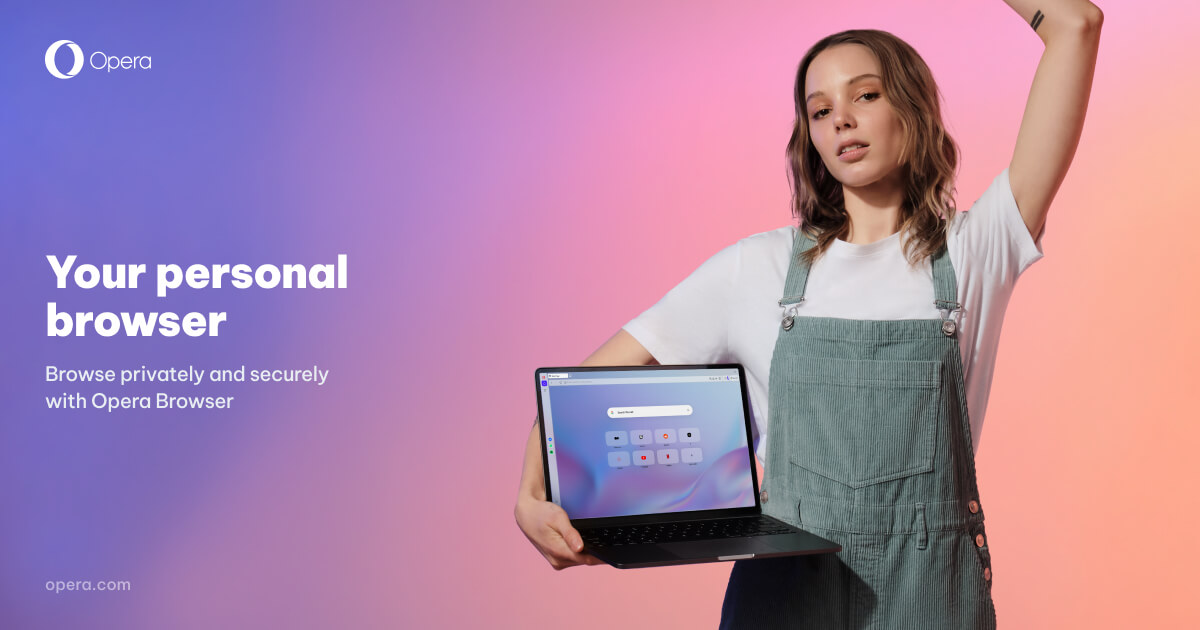
Opera dropped a new web standard on October 27, 2026, aimed at letting users deploy AI models locally inside the browser. TechCrunch reported the move, and it lands at a moment when browsers are quietly becoming the runtime for small models—not just the window to the cloud.
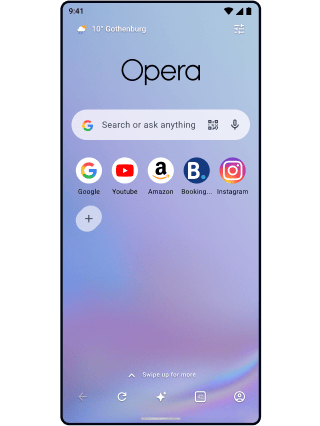
What Opera Actually Proposed
The headline is simple: a standard for local AI deployment in the browser. The details matter more. Opera is trying to define how a web page can hand a model to the browser, where it runs, and how the page talks to it—without shipping every token to a remote API.
That is a different problem than “run Llama in a tab.” WebAssembly and WebGPU already let you do that. The missing piece is a contract: a predictable interface so developers don’t rebuild the plumbing for every browser and every model.
Why Browsers Are the New Local Runtime
This is not Opera alone. Chrome has been pushing WebGPU and built-in AI APIs. Firefox has been experimenting with local inference. The browser is the one runtime every user already has installed, already sandboxed, and already updated.
For builders, that changes the deployment math. A local model inside the browser means no server bill per token, no data leaving the device, and no separate app install. It also means you inherit the browser’s memory limits, its GPU access rules, and its update cadence.
The Hard Part Is Not the Model
The hard part is the standard. A local AI API has to answer questions that WebAssembly never had to: Which model? Whose weights? What happens when the device has 8GB of RAM and no discrete GPU? How do you cache a multi-gigabyte download without blowing the storage quota?
Opera’s proposal is a first draft, not a finished spec. TechCrunch’s report frames it as an opening move. That is the right frame. Standards live or die on whether other vendors adopt them, and a browser-only standard from one vendor is a suggestion until Chrome and Safari sign on.
What Builders Should Do Now
Don’t rewrite your stack today. Do watch the interface. If a local AI standard lands, the winners are the teams that already separated their model calls from their product logic—the ones who can swap a cloud endpoint for a browser-local call without touching the UI.
Start with the boring cases: classification, embedding, short summarization. Those are the workloads where a small local model beats a round trip to an API on latency and cost. Keep the frontier model for the hard reasoning.
The bigger signal is strategic. Opera is betting that the browser is where AI gets deployed, not just where it gets consumed. If that bet holds, the next generation of web apps ships with a model attached—and the cloud bill stops scaling with every user.
Sources
> Want more like this?
Get the best AI insights delivered weekly.
By subscribing, you agree to our Privacy Policy. You can unsubscribe at any time.
> Related Articles
AI Labs Claim Their Models Refuted a 20-Year-Old Math Proof—Here's the Catch
Frontier labs say their models refuted the Exponential Time Hypothesis. The claim is bigger than a benchmark win—and messier than a theorem. Here's what builders should actually ta
Amazon's AI Division Is Shrinking—and the Word 'Nova' Explains Why
Futurism reports Amazon is paring back its AI division after repeated misses. The Nova model line sits at the center of a quiet strategy retreat.
Google's Genie 4 Adds Audio and Real-Time Steering—What Builders Get
Google's Genie 4 world model adds audio, more realistic worlds, and real-time steering. TechCrunch reported it on October 27, 2026. Here's what builders should know.
Most Read
- 1 Kimi K3.1 Pro: China's Open-Weight Model Just Caught the Frontier
- 2 OpenAI Is Buying the Bottleneck: Can Orchestra Bio Cut a 15-Year Drug Timeline?
- 3 1,068 Tokens Per Second: Can Mercury 3 Change How LLMs Generate Text?
- 4 Same Price, Better Coding: How Good Is DeepSeek V4.1 Flash 1017?
- 5 Used OpenCode? Should You Rotate Your API Key After the Console Breach?




Latest News
- AI Labs Claim Their Models Refuted a 20-Year-Old Math Proof—Here's the Catch
- Amazon's AI Division Is Shrinking—and the Word 'Nova' Explains Why
- Google's Genie 4 Adds Audio and Real-Time Steering—What Builders Get
- Anthropic's S-1 Just Exposed How It Keeps Enterprise Customers Locked In
- Cloudflare's GLM-5.3 Cache Bug Leaked One Request Into Another
- Cohere Says Qwen Tried to Send a File to Beijing—Here's What Actually Happened
Tags
> Stay in the loop
Weekly AI tools & insights.