AI in Dental Practices: Where Diagnostic Support Helps—and Where It Does Not
Dental AI can standardize image review and patient communication, but evidence, clearance scope, workflow fit, and clinician oversight determine whether it is useful.
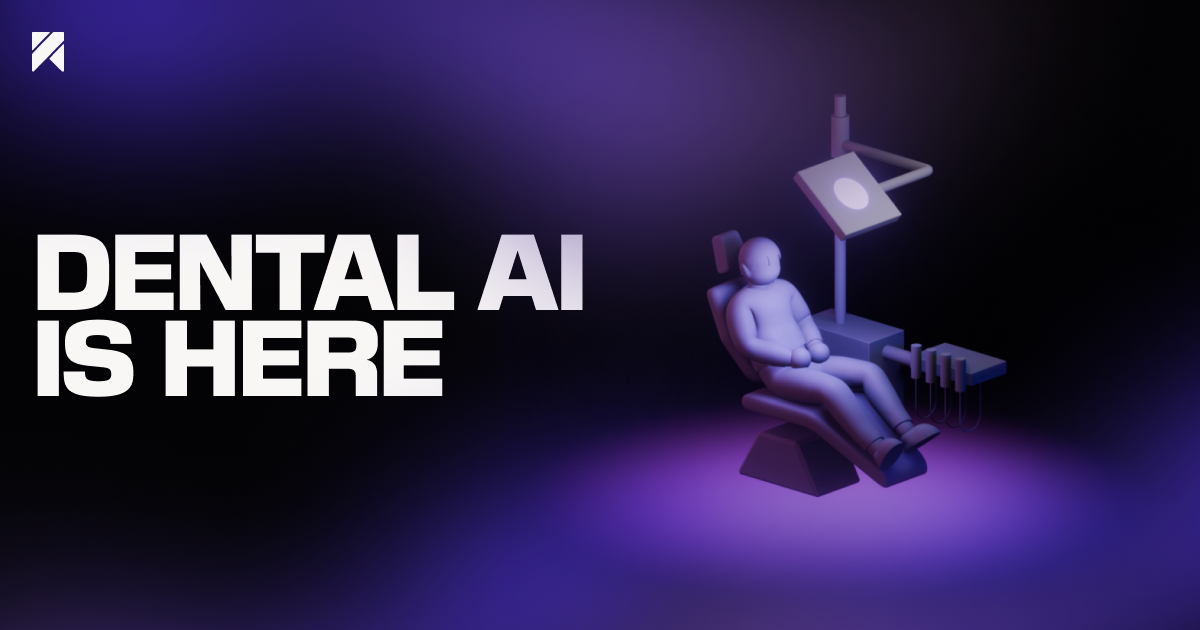
Dental AI is often sold with an appealing chain of claims: the software finds disease that people miss, patients understand colorful overlays, case acceptance increases, and the practice earns more. Each link is possible. None should be assumed.
The responsible case for these tools is more modest. Image-analysis software can act as a structured second look at radiographs, draw attention to regions that deserve review, and make a clinician’s explanation easier to follow. Whether that improves care depends on the product’s authorized use, the patient population, image quality, staff workflow, and the dentist who remains accountable for the decision.
Start with the intended use, not the demo
Overjet and Pearl market systems that analyze dental radiographs and display findings or measurements. A polished overlay can look like a diagnosis, but the exact intended use matters. Practices should locate the product’s current regulatory documentation and confirm which image types, findings, ages, and clinical settings it covers.
The FDA maintains a public list of AI-enabled medical devices and links to device records. That is the appropriate starting point in the United States—not a reseller slide or a general statement that a company is “FDA cleared.” Clearance for one function does not automatically validate every feature in a software bundle, and rules differ by country.
The clinical question is also narrower than “is the AI accurate?” Peer-reviewed reviews indexed by PubMed show a rapidly growing dental-imaging literature, but reported performance varies with task, dataset, reference standard, and study design. A model evaluated on curated retrospective images may behave differently on a practice’s sensors, positioning errors, restorations, and patient mix.
A safer implementation sequence
1. Define one use case. Choose a bounded task, such as assisting review of bitewing images or producing consistent periodontal measurements. Do not activate every feature at once.
2. Establish the human decision point. The dentist reviews the original image and clinical history, then considers the AI result. Staff should never tell a patient that “the computer diagnosed” a condition. The system supplies evidence for a licensed clinician’s judgment.
3. Validate locally. For a limited sample, record agreement and disagreement between clinicians and the tool. Review both false positives and false negatives. Difficult cases—poor image quality, overlapping contacts, unusual anatomy, extensive restorations—are especially important.
4. Standardize patient communication. An overlay can help explain why a region warrants attention, but it should be shown alongside the original image and the dentist’s interpretation. Avoid presenting a confidence score as certainty.
5. Monitor after launch. Track overridden suggestions, technical failures, changes after software updates, and complaints. A model is not a set-and-forget appliance.
Revenue is the wrong primary metric
Better communication may lead more patients to accept appropriate treatment. It can also reduce inconsistency in how findings are documented. Those are plausible benefits, but a revenue target creates a conflict: software intended to support review can become a sales pressure tool.
A better dashboard begins with clinical and operational measures: time per image review, proportion of cases requiring manual correction, clinician agreement, patient comprehension, and follow-up outcomes. Financial performance can be observed, but it should not determine whether a borderline finding becomes treatment.
Any return-on-investment calculation must include subscription fees, hardware or integration costs, staff training, privacy review, and extra clinician time spent resolving disagreements. A practice that sees more alerts but no improvement in decision quality has purchased noise.
Privacy and accountability remain with the practice
Radiographs and patient identifiers are sensitive health data. Before deployment, confirm where images are processed, what is retained, whether data is used to train models, which subcontractors receive it, and how deletion works. Contract terms must match the practice’s legal obligations in its jurisdiction.
Practices also need a downtime procedure. If the service is unavailable, normal clinical review must continue. Records should distinguish the clinician’s finding from the software’s output and preserve enough information to audit a disputed decision.
The bottom line
Dental AI can be useful when it makes review more consistent and explanations clearer. It becomes risky when a vivid overlay is treated as ground truth or when case acceptance replaces patient welfare as the success criterion.
The best pilot is small, documented, and skeptical. Verify the regulatory scope, test the tool on local images, keep the dentist in charge, and measure errors as carefully as time saved. If the system improves clinical communication under those conditions, expansion may be justified. If it mainly produces more colored boxes, the practice has learned that before building its workflow around them.
Sources
> Want more like this?
Get the best AI insights delivered weekly.
By subscribing, you agree to our Privacy Policy. You can unsubscribe at any time.
> Related Articles
Anthropic's IPO Lands a 'High Junk' Rating—Who Pays the Bill?
Anthropic is expected to get a high-yield junk credit rating after its IPO, per the FT. That sets the price of future borrowing and tells builders what the market really thinks of
Token Budget SLOs for LLM Apps: Control Cost Without Breaking Quality
Turn token spend into an operating target. Budget by workflow, reserve output capacity, detect context growth, and degrade gracefully before costs surprise you.
AI Etsy Business: Sell AI-Generated Products
Most AI Etsy sellers fail because they upload pretty junk. Here's how to build a real product line with AI, realistic margins, and no policy faceplant.
Most Read
- 1 Kimi K3.1 Pro: China's Open-Weight Model Just Caught the Frontier
- 2 OpenAI Is Buying the Bottleneck: Can Orchestra Bio Cut a 15-Year Drug Timeline?
- 3 1,068 Tokens Per Second: Can Mercury 3 Change How LLMs Generate Text?
- 4 Same Price, Better Coding: How Good Is DeepSeek V4.1 Flash 1017?
- 5 Used OpenCode? Should You Rotate Your API Key After the Console Breach?





Latest News
- Claude Code Left Secrets in 1,122 GitHub Files—Check This Setting
- Gemini Omni 1.2 Flash Makes 15-Second Video Cheaper—Then Comes the Edit
- GPT-6 Cyber Can Build Exploits—But Builders Face a Different Test
- 1,122 GitHub Files Exposed Secrets—What Did “Don't Ask Again” Save?
- Gemini Omni 1.2 Flash Offers $1.05 Clips—What Does That Buy You?
- GPT-6 Cyber Hits 48.5% on ExploitGym—Who Gets the Keys?
Tags
> Stay in the loop
Weekly AI tools & insights.