Google's Live Translate Turns Your iPhone Into a Universal Ear
I'll write this analysis article now. The dream of real-time language translation has been science fiction for decades. Douglas Adams gave us the Babel Fish. Star Trek gave us t...
I’ll write this analysis article now.
Your Earbuds Just Got a Babel Fish Upgrade — But Let’s Talk About What That Actually Means
The dream of real-time language translation has been science fiction for decades. Douglas Adams gave us the Babel Fish. Star Trek gave us the Universal Translator. Google is giving us Pixel Buds — and now, finally, iOS support. The question isn’t whether live earphone translation is cool. It obviously is. The question is whether Google’s implementation is good enough to matter, and whether it matters that it took this long to reach iPhone users.
Spoiler: it matters more than the announcement makes it sound, and there are real limitations Google is quietly glossing over.
What Google Actually Announced
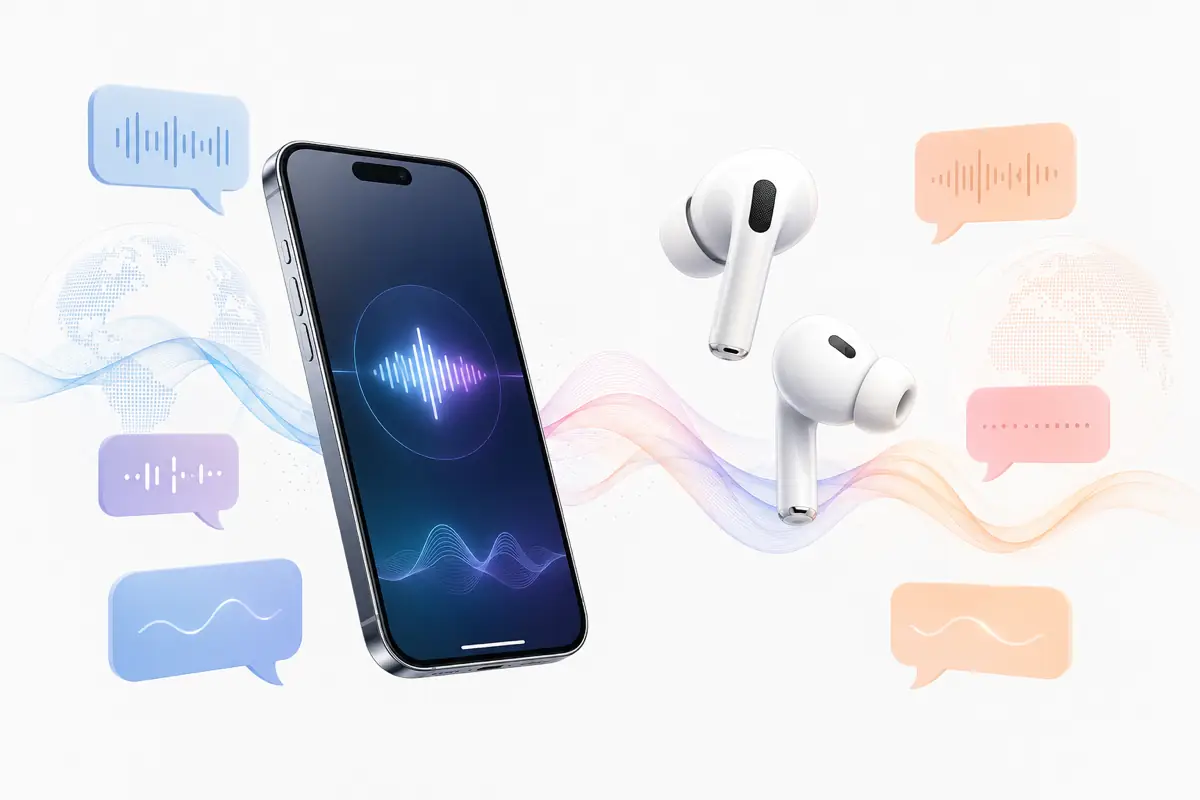
Google Translate’s Live Translate with headphones is expanding to iOS, alongside a broader rollout to more countries on both iOS and Android. The feature does what it says: you put on compatible headphones, open Google Translate, and the app listens to a conversation partner speaking another language, then plays the translation directly into your ears in near-real time.
The setup works with any Bluetooth headphones — this isn’t locked to Pixel Buds or Google hardware, which is a meaningful design choice. On Android, the feature has existed for a while. On iOS, it’s arriving now, in March 2026. The expansion to additional countries extends the geographic reach beyond the initial launch markets.
That’s the announcement. Now let’s dig into what it means.
The iOS Delay Is a Story in Itself
Google Translate’s live translation through earbuds has been an Android feature since around 2019 with the original Pixel Buds integration, then evolved into a broader headphones feature. iOS users are getting it in 2026. That’s roughly seven years of Android exclusivity on a feature that requires no special hardware.
This isn’t a technical limitation — Google Translate runs fine on iOS. It’s a combination of Apple’s platform restrictions (microphone access policies, background audio processing rules) and, likely, deliberate competitive prioritization. Google had every incentive to keep premium features on Android longer.
What changed? A few things. Apple loosened some background audio processing restrictions in recent iOS versions. The AI translation market got crowded enough that Google needed to stop leaving features off iOS. And frankly, hundreds of millions of iPhone users using Google Translate was always good for Google’s data flywheel, even if it helped a competitor’s platform.
The delay is a reminder that cross-platform feature parity is a business decision, not an engineering one.
The Actual User Experience: What Works, What Doesn’t
Live translation through earbuds is genuinely useful in specific scenarios. A tourist navigating a market in Tokyo. A traveler asking for directions. A business meeting where one participant doesn’t share your language. Quick, high-stakes exchanges where pulling out a phone and waiting for a translation would break the social flow.
Where it falls apart is more nuanced. Real-time AI translation introduces latency — typically one to three seconds, sometimes more with complex sentences. For natural conversation, that lag is perceptible. You’re waiting for your earbuds to catch up while the other person has already moved on. The Babel Fish in your ear creates a slightly uncanny valley of conversation pacing.
Accuracy is the other variable. Google Translate is genuinely excellent at common language pairs — Spanish, French, German, Japanese, Mandarin — and less reliable on lower-resource languages or dialects. Live translation compounds these errors because there’s no opportunity to review before the translation plays in your ear. A mistranslation in a real-time conversation can create confusion faster than the subsequent correction can fix it.
The feature also requires a phone in your pocket running the app. It’s not entirely ambient — you’re tethered to the Google Translate interface. For a quick exchange, that’s fine. For an extended conversation, you’re constantly aware of the scaffolding.
The Competitive Landscape Is Getting Interesting
Google isn’t alone here. Apple has its own Translate app with conversation mode, which has been on iOS since iOS 14. Microsoft Translator has offered real-time conversation translation for years, including a multi-participant mode. Amazon has integrated translation into Alexa. Various startups have built translation hardware specifically around this use case.
What Google has that competitors don’t is scale. Google Translate supports over 130 languages with voice features. Apple Translate supports around 20. Microsoft Translator covers more ground than Apple but less than Google. For common language pairs, the quality gap between these services has narrowed significantly — modern neural machine translation is good. For less common languages, Google’s breadth is a real differentiator.
The hardware angle is interesting too. Apple’s AirPods are the dominant wireless earbuds globally, with hundreds of millions in circulation. Apple’s own Translate app works natively with AirPods, which means Apple can optimize the audio pipeline in ways Google can’t with third-party headphones. But Apple’s language support is limited enough that many iPhone users will choose Google Translate anyway, making this iOS launch potentially significant for Google’s usage numbers.
There’s also the AI assistant angle. Competing real-time translation is increasingly part of broader AI assistant capabilities. Both Google (via Gemini) and Apple (via upgraded Siri) are building toward assistants that can handle translation as part of a larger contextual understanding. The standalone translation app is arguably a transitional form — in a few years, you might not open a translate app at all, just ask your assistant to translate for you.
Implications for Developers and the Platform Ecosystem
For third-party developers building multilingual apps, Google’s move signals something important: real-time translation is becoming infrastructure, not a differentiator. When Google ships a free, good-enough translation layer for iOS, it raises the floor on what’s acceptable in any app that touches language.
Apps targeting travelers, hospitality, healthcare, or international business increasingly need to either integrate real-time translation natively or accept that users will just toggle over to Google Translate. That’s pressure on specialized apps to justify their existence with accuracy, domain expertise, or privacy features (a significant gap — Google’s translation data goes to Google).
Privacy-focused alternatives like DeepL, which offers end-to-end encrypted translation, or on-device translation models that never phone home, gain value as Google’s approach becomes dominant. The more ubiquitous Google Translate is, the more meaningful it becomes to offer an alternative that doesn’t send every conversation through Mountain View’s servers.
The Honest Verdict
Live earphone translation from Google is a genuinely useful feature that should have been on iOS much sooner, and its broader country rollout is legitimately welcome. Google is delivering real value here.
But let’s not oversell it. The latency is noticeable. The interface requires active phone management. The accuracy degrades on complex or dialect-heavy speech. And the privacy model is whatever Google’s privacy model is — which is to say, your conversations are being processed on Google’s infrastructure.
The bigger story isn’t the feature itself — it’s what it represents. Real-time speech translation is officially a commodity feature. Not a premium add-on, not a party trick, not a specialized tool for international business travelers. A free thing you can do with any Bluetooth headphones and an app that’s already on your phone.
That normalization matters. The world has 7,000 languages and most of them exist in a context of mutual incomprehension. Tools that reduce that barrier — even imperfectly, even with latency, even with the privacy tradeoffs of a Google product — shift what’s possible for ordinary people navigating multilingual situations.
The Babel Fish was fiction. This isn’t quite that. But it’s closer than it was yesterday, and it’s on your iPhone now.
Use it for: quick tourist exchanges, understanding directions, navigating markets and transit, restaurant orders.
Avoid it for: sensitive conversations you don’t want Google to have, extended nuanced discussions where precision matters, or any language pair where you can verify the translation quality for yourself first.
Watch for: Apple integrating this kind of capability directly into AirPods firmware, bypassing the app layer entirely. That would be the actual platform shift — and Apple has both the hardware and, with recent AI investments, the model capabilities to do it.
Sources
> Want more like this?
Get the best AI insights delivered weekly.
By subscribing, you agree to our Privacy Policy. You can unsubscribe at any time.
> Related Articles
AI Inference Routing: How Smart Teams Cut Cost Without Wrecking Quality
Your AI bill does not need another heroic model. Inference routing sends easy work to cheap models and saves premium brains for prompts that earn it.
Small AI Models Are Winning: The Practical Case for Local Intelligence
Big models still get the hype, but the real AI shift is happening on laptops, phones, and edge servers where cheaper, faster models actually ship.
The Synthetic Data Boom: How Fake Data Is Building Real AI
Synthetic data now trains more AI models than real data. The industry is worth billions, and it's solving AI's biggest bottleneck.
Tags
> Stay in the loop
Weekly AI tools & insights.