Elon Musk and xAI: Why Grok Matters More Than You Think
Don't dismiss Grok as just another AI chatbot. Elon Musk's xAI is playing a longer, bolder game, and its implications are far-reaching. Here's why.
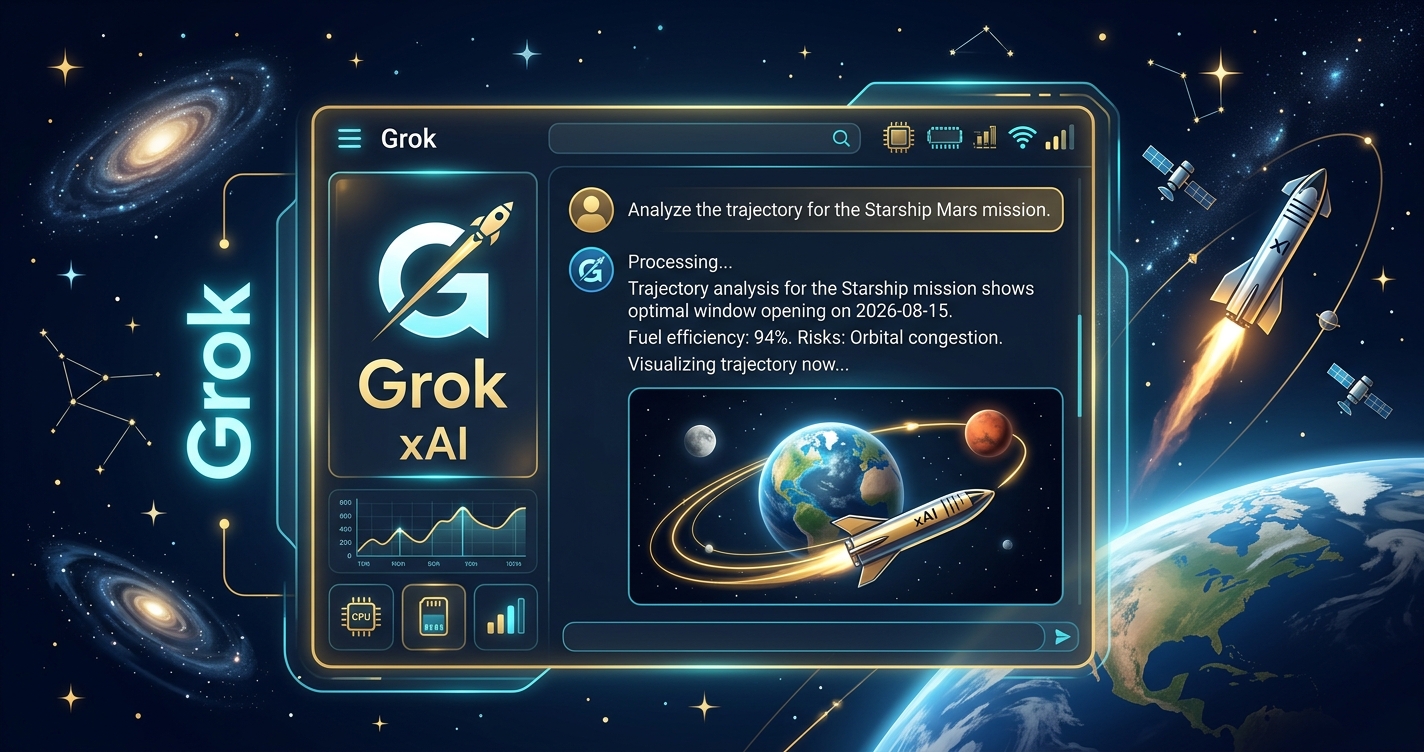
Let’s cut the crap. You’ve heard the name Elon Musk. You’ve probably got an opinion, good or bad, about the guy who’s trying to colonize Mars, revolutionize electric cars, and make Twitter (now X)… well, X. But his latest venture, xAI, and its flagship product, Grok, are more than just another shiny object in the tech billionaire’s sprawling empire. This isn’t just about building a chatbot; it’s about fundamentally altering the trajectory of artificial intelligence, and frankly, you’d be foolish to ignore it.
Musk isn’t just wading into the AI pool; he’s cannonballing in, aiming to make waves big enough to drown the competition or, at the very least, force them to swim harder. His motivations are complex, his methods often controversial, but the ambition is undeniable. Grok, with its real-time access to X and a personality that mirrors its creator’s, is a statement. And that statement is: “The gloves are off.”
So, buckle up. We’re diving deep into the why, what, and how of Elon Musk’s xAI, exploring why Grok isn’t just a quirky side project, but a serious contender in the AI arms race.
Why Did Elon Musk Even Start xAI? The OpenAI Betrayal Mythos
To understand xAI, you have to rewind a bit, back to the halcyon days of 2015. Elon Musk was a co-founder of OpenAI, the research lab that would eventually unleash ChatGPT upon the world. The initial vision, as Musk vehemently argues, was clear: develop Artificial General Intelligence (AGI) for the benefit of all humanity, as a non-profit, open-source endeavor. It was meant to be a counterweight to the potential dangers of corporate-controlled AGI.
Fast forward to today, and Musk sees a stark betrayal of that original mission. OpenAI, now a for-profit entity with a multi-billion dollar investment from Microsoft, is anything but open. Its models are proprietary, its decision-making opaque, and its focus, in Musk’s view, has shifted from universal benefit to shareholder value. He’s been vocal, calling OpenAI “a closed-source, maximally-for-profit company effectively controlled by Microsoft.” (Source: Reuters - Elon Musk sues OpenAI)
His concerns aren’t just about profit. Musk has long been a Cassandra of AI, warning about its existential risks if not developed with extreme caution and transparency. He believes that a powerful AGI controlled by a few corporations, or worse, a single dominant player, poses an unacceptable threat to humanity’s future. The lawsuit he filed against OpenAI and its CEO Sam Altman in March 2024 underscores the depth of his conviction, alleging breach of contract and a deviation from the founding non-profit agreement.
So, xAI isn’t just a business venture for Musk; it’s presented as an ideological crusade. It’s his attempt to reclaim the narrative, to build an AI that prioritizes “truth-seeking” and understanding the universe, rather than simply generating commercially viable text. Whether you buy into the “savior of humanity” narrative or see it as a billionaire’s ego trip, the context of the OpenAI split is crucial for understanding xAI’s very existence. It’s a direct challenge, born from a sense of perceived betrayal and a deep-seated fear of unchecked AI power.
What Exactly is xAI, and What’s Its Core Mission?
Launched in July 2023, xAI positions itself with an audacious goal: “to understand the true nature of the universe.” That’s not your typical corporate mission statement, is it? It’s deliberately philosophical, aiming beyond mere utility or entertainment. Musk envisions xAI developing an AI that doesn’t just parrot information but genuinely comprehends complex concepts, pushing the boundaries of what intelligence means.
The team behind xAI is a lineup of serious talent, poached from some of the most prestigious AI research labs in the world. We’re talking alumni from Google DeepMind, OpenAI, Microsoft Research, and even Tesla (Musk’s other AI-heavy venture). These aren’t junior developers; they’re seasoned researchers with track records in building foundational AI models, including authors of some of the most impactful papers in the field. This isn’t a garage startup; it’s an assembly of AI heavyweights.
Initially, Musk hinted at developing a “TruthGPT,” an AI that would strive for maximum truthfulness and minimize bias, a direct jab at what he perceives as the “wokeness” or ideological leanings of other leading models. While “TruthGPT” hasn’t manifested as a distinct product name, the underlying philosophy clearly informs Grok. The ambition is to create an AI that is curious, probing, and willing to challenge assumptions, rather than simply providing polite, sanitized answers. It’s an AI designed to think differently, much like its creator.
How Does Grok Stand Out in a Crowded AI Arena?
In a world saturated with chatbots – ChatGPT, Gemini, Claude, and dozens of others – Grok needs more than just a famous founder to stand out. It needs unique capabilities, a distinct personality, and a clear value proposition. And it delivers on all three, albeit with a certain Muskian flair.
What Are Grok’s Unique Capabilities?
Grok’s primary differentiator, its killer feature, is its real-time access to information from the X platform. This is huge. While other LLMs are typically trained on vast datasets that are periodically updated, Grok is constantly ingesting and processing the firehose of information flowing through X. This means it can discuss current events, breaking news, and trending topics with a level of immediacy that its competitors simply can’t match without specific plugins or browser access. Want to know the latest meme, the current geopolitical hot take, or what’s happening right now in a specific corner of the internet? Grok’s got its finger on the pulse.
Beyond its data source, Grok also boasts a “rebellious streak” and a sense of humor. Musk himself described it as being “designed to answer questions with a bit of wit and has a rebellious streak, so please don’t use it if you hate humor.” (Source: xAI Official Website). This isn’t your polite, subservient AI. Grok is designed to be irreverent, to sometimes push boundaries, and to answer controversial questions that other AIs might shy away from or flat-out refuse. It mirrors Musk’s own public persona – direct, sometimes provocative, and not afraid to challenge norms.
Availability is another key aspect. Grok isn’t free to everyone. It’s currently exclusive to X Premium+ subscribers. This positions it as a premium feature within the X ecosystem, offering added value to users who are already paying for an enhanced X experience. As of early 2024, X Premium+ costs $16 per month or $168 annually, offering not just Grok access but also an ad-free experience, larger post limits, and more. This makes Grok a direct incentive to subscribe to X’s highest tier.
Technically, Grok is built on xAI’s custom Large Language Model, Grok-1, which was open-sourced in March 2024. This move, ironically, brings xAI closer to the “open” principles Musk initially championed for OpenAI. By open-sourcing the base model, xAI invites external developers to inspect, modify, and build upon its technology, potentially fostering a broader ecosystem and accelerating its development.
Grok vs. The Giants: A Feature Showdown
Let’s put Grok side-by-side with the heavyweights to see how its unique traits stack up.
| Feature | Grok (xAI) | ChatGPT (OpenAI) | Gemini (Google) | Claude (Anthropic) |
|---|---|---|---|---|
| Primary Data Source | Real-time X (Twitter) feed, general web data | Vast general web data (up to specific cutoff) | Google’s vast index, real-time search (Pro versions) | Large text and code datasets (up to specific cutoff) |
| Real-time Info | Yes (via X) | Yes (via browser plugin/Plus subscription) | Yes (Pro versions) | No (limited to training data cutoff) |
| Personality | Witty, irreverent, rebellious, direct | Generally helpful, polite, neutral | Versatile, can adapt to different personas | Helpful, harmless, honest (aligned with constitutional AI principles) |
| Handling Controversial Qs | Willing to engage, sometimes provocatively | Often deflects, provides balanced views, or refuses | Generally cautious, provides balanced views | Extremely cautious, often refuses or redirects |
| Pricing/Access | X Premium+ subscription ($16/month) | Free (basic), Plus ($20/month), Team, Enterprise | Free (basic), Advanced ($20/month) | Free (basic), Pro ($20/month) |
| Multimodality | Primarily text-based (as of early 2024) | Yes (DALL-E 3 integration, voice, vision) | Yes (vision, audio, text) | Limited (text, some image understanding) |
| Open Source Model | Yes (Grok-1 base model) | No (proprietary) | No (proprietary) | No (proprietary) |
This table highlights Grok’s distinct market positioning. While it might lack the full multimodal capabilities of Gemini or the extensive plugin ecosystem of ChatGPT Plus, its real-time access and distinct personality carve out a niche. It’s not trying to be a general-purpose, bland assistant; it’s aiming to be a specific kind of conversation partner for a specific audience.
The Memphis Supercomputer: xAI’s Secret Weapon?
Musk isn’t just building an AI; he’s building the infrastructure to make it truly powerful. His plans for a massive supercomputer in Memphis, Tennessee, are a testament to xAI’s long-term ambitions and its commitment to scaling AI capabilities to unprecedented levels. This isn’t just about training bigger models; it’s about training better, more sophisticated, and potentially truly AGI-level models.
The proposed supercomputer is envisioned to be a behemoth, reportedly integrating 100,000 NVIDIA H100 GPUs. For context, the H100 is NVIDIA’s flagship AI accelerator, a staggeringly powerful and expensive piece of hardware. Building a cluster of this magnitude would place xAI’s computing power on par with, or even surpass, the current leading AI labs globally. (Source: The Verge - Elon Musk’s xAI is building a ‘gigafactory of compute’) This isn’t a small investment; it’s a multi-billion dollar commitment to raw computational muscle.
Musk has dubbed this initiative the “gigafactory of compute,” drawing parallels to Tesla’s massive battery and vehicle production facilities. This term isn’t accidental; it emphasizes the industrial scale and strategic importance he places on this infrastructure. The idea is to create a bottleneck-free environment for AI research and development, allowing xAI’s scientists to iterate faster, experiment with more complex architectures, and train models on truly astronomical datasets without being limited by compute availability.
What does this mean for Grok and xAI’s future? More compute power translates directly to:
- Larger Models: The ability to train models with more parameters, leading to greater complexity and understanding.
- Faster Training: Reducing the time it takes to develop and deploy new generations of AI.
- More Sophisticated Capabilities: Allowing for research into novel AI architectures, multimodal systems, and potentially true reasoning abilities that go beyond current LLMs.
This supercomputer isn’t just a technical detail; it’s a statement of intent. It signals that xAI isn’t content to play catch-up with off-the-shelf solutions. They are building their own highway to AGI, and they’re doing it at a scale that demands serious attention.
What’s xAI’s Competitive Positioning in the AI Arms Race?
The AI landscape is a battleground, with giants like Google, Microsoft, Amazon, and Meta pouring billions into research and development. How does xAI, a relative newcomer, expect to compete, let alone thrive, against such entrenched players?
Is xAI a Real Threat or Just Noise?
Dismissing xAI as mere “noise” would be a grave mistake. Here’s why it’s a legitimate, albeit unconventional, threat:
- Leveraging the X Ecosystem: This is xAI’s secret weapon. Grok’s real-time access to the vast, diverse, and often chaotic data stream from X provides an unparalleled advantage for understanding current trends, public sentiment, and rapidly evolving information. No other AI has such direct, unfiltered access to this particular slice of humanity’s collective consciousness. This gives Grok an edge in topicality and relevance that’s hard to replicate.
- Musk’s Personal Brand and Vision: Love him or hate him, Musk is a magnet for talent and capital. His audacious vision, coupled with his track record of disrupting industries (SpaceX, Tesla), attracts top AI researchers who want to work on cutting-edge problems with minimal corporate bureaucracy. His ability to rally resources and inspire dedication is a powerful, if intangible, asset.
- The “Rebellious” Niche: In an era where many AIs are increasingly sanitized, politically correct, and prone to “refusal to answer” anything even slightly controversial, Grok’s willingness to engage with humor and directness appeals to a segment of the user base tired of blandness. This niche, while potentially controversial, is underserved.
- Open-Sourcing Grok-1: By open-sourcing its base model, xAI is inviting external collaboration, inspection, and development. This can accelerate innovation, build community, and potentially lead to new applications and improvements that proprietary models can’t achieve as quickly. It’s a strategic move to gain mindshare and build an ecosystem.
However, xAI faces significant challenges:
- Catching Up: Despite its aggressive push, xAI is still playing catch-up to companies like OpenAI and Google that have years of head start in foundational AI research and product development. Their models are more mature, their ecosystems more robust.
- Regulatory Scrutiny: Musk’s direct approach and Grok’s “rebellious” nature could easily run afoul of content moderation policies or attract regulatory attention, especially concerning misinformation or controversial outputs.
- Public Perception & Bias: The reliance on X data means Grok inherits the platform’s biases, echo chambers, and propensity for misinformation. Managing these issues while maintaining its distinct personality will be a tightrope walk.
How Does xAI Plan to Monetize Grok and Beyond?
Currently, Grok’s primary monetization strategy is through its integration with X Premium+ subscriptions. It serves as a powerful incentive to upgrade to the highest tier of X, indirectly generating revenue for the broader X platform. This leverages the existing user base and provides an immediate value proposition.
Looking beyond Premium+, xAI’s long-term monetization could involve:
- Enterprise Solutions: Developing specialized versions of Grok or other xAI models for businesses, potentially offering custom training, secure environments, or industry-specific knowledge bases.
- API Access: Providing developers with API access to xAI’s models, allowing them to integrate Grok’s capabilities into their own applications, similar to how OpenAI monetizes its GPT models.
- Specialized Models: As xAI pursues its goal of “understanding the universe,” it may develop highly specialized AI models for scientific research, engineering, or other complex domains that could command premium licensing fees.
- Indirect Benefits to X: A highly capable and popular Grok makes the X platform more attractive, potentially drawing in more users, increasing engagement, and boosting advertising revenue or subscriptions across the board.
Ultimately, xAI’s strategy is to build superior AI, and then figure out the most effective ways to deploy and monetize it, with the X platform serving as a critical launchpad and data source.
What Are the Practical Takeaways for You?
Whether you’re an AI enthusiast, a developer, a business leader, or just someone trying to make sense of the tech world, xAI and Grok offer some crucial lessons and considerations.
- For AI Users (Personal & Professional): Diversify Your AI Portfolio. Don’t marry yourself to a single AI. Grok’s real-time capabilities and unique personality make it an excellent complement to other AIs like ChatGPT or Claude, not necessarily a replacement. Use Grok for trending topics, quick takes on current events, or when you need a dose of irreverent humor. Use others for deep dives, complex reasoning, or highly sensitive tasks. Understanding the strengths and weaknesses of each tool is key.
- For Developers and Researchers: Keep an Eye on xAI’s Open-Source Moves. The open-sourcing of Grok-1 is a significant development. If xAI continues this trend, it could provide valuable insights into cutting-edge LLM architectures and training methodologies. Experiment with Grok-1, contribute to its development, and see how its unique characteristics can be leveraged in your own projects. This is a chance to participate directly in the evolution of a major AI model.
- For Businesses and Strategists: Don’t Underestimate the Power of Niche & Data Integration. Grok demonstrates that deep integration with a proprietary, real-time data source (X) can create a powerful competitive advantage, even against more established players. Think about what unique, proprietary data your organization has that could be leveraged to train or fine-tune an AI model, giving you an edge in your specific industry. The future of AI isn’t just about general models; it’s about specialized, data-rich applications.
- For Everyone: Critical Thinking is More Important Than Ever. Grok’s “rebellious streak” and access to the unfiltered X feed mean it’s more likely to reflect the biases and controversies present on the platform. Always verify information, understand the potential for bias, and approach AI outputs with a healthy dose of skepticism, especially when dealing with rapidly evolving or politically charged topics. AI is a tool; human judgment remains paramount.
Frequently Asked Questions
Is Grok truly better than ChatGPT?
“Better” is subjective. Grok excels in real-time information access (via X) and boasts a unique, often irreverent personality. ChatGPT (especially Plus/Pro versions) often has a broader knowledge base, more robust plugin ecosystem, and better multimodal capabilities. Grok is a strong complement, offering a distinct experience rather than a direct, all-around superior alternative.
How much does Grok cost?
Grok is included as a feature with an X Premium+ subscription, which costs $16 per month or $168 annually. There is no standalone Grok subscription currently available.
What is xAI’s long-term goal?
xAI’s stated long-term goal is “to understand the true nature of the universe.” This implies a focus on developing Artificial General Intelligence (AGI) that can genuinely comprehend complex systems, reason, and learn like a human, going beyond current large language models.
Can Grok be used for serious work or just for fun?
While Grok’s personality is designed to be witty and irreverent, its real-time access to X data makes it surprisingly useful for serious work requiring current information. Researchers, journalists, or marketers tracking trends can leverage its topical awareness. However, for highly sensitive tasks requiring absolute neutrality or precise factual recall from curated datasets, other AIs might be more suitable. Always verify critical information.
What are the main risks associated with using Grok?
The primary risks include potential exposure to misinformation or biased content due to its reliance on the X feed. Its “rebellious streak” might also lead to controversial or unfiltered responses that could be inappropriate in certain contexts. As with any AI, there’s always a risk of “hallucinations” or generating incorrect information. Users should exercise critical judgment and verify important facts.
Is xAI planning to open-source more of its technology?
xAI has already open-sourced Grok-1, its foundational large language model. This indicates a willingness to embrace open-source principles, at least for core model architectures. While future plans are not fully public, this initial move suggests they may continue to release components or insights to the developer community.
Sources
> Want more like this?
Get the best AI insights delivered weekly.
By subscribing, you agree to our Privacy Policy. You can unsubscribe at any time.
> Related Articles
George Hotz and tinygrad: The Hacker Who Thinks NVIDIA Is a Scam
George Hotz jailbroke the iPhone at 17, reverse-engineered PlayStation, and now he's building a deep learning framework to break NVIDIA's stranglehold on AI. Classic Hotz.
Lina Khan: The Regulator Who Tried to Put a Leash on Big AI
As FTC Chair, Lina Khan launched the most aggressive regulatory campaign against AI companies in US history. Whether she succeeded depends on who you ask.
Percy Liang: The Stanford Professor Holding AI Companies Accountable with Data
Percy Liang built HELM, the benchmark framework that shows how AI models actually perform — not how companies claim they do. Big Tech isn't thrilled.
Tags
> Stay in the loop
Weekly AI tools & insights.