Claude's ART Enzyme Discovery Is Promising—and Still a Hypothesis
Anthropic says 950 Claude agents found an unusual reverse-transcriptase system in phage DNA. Human lab work confirmed key structure, but the system's biological function remains unknown.
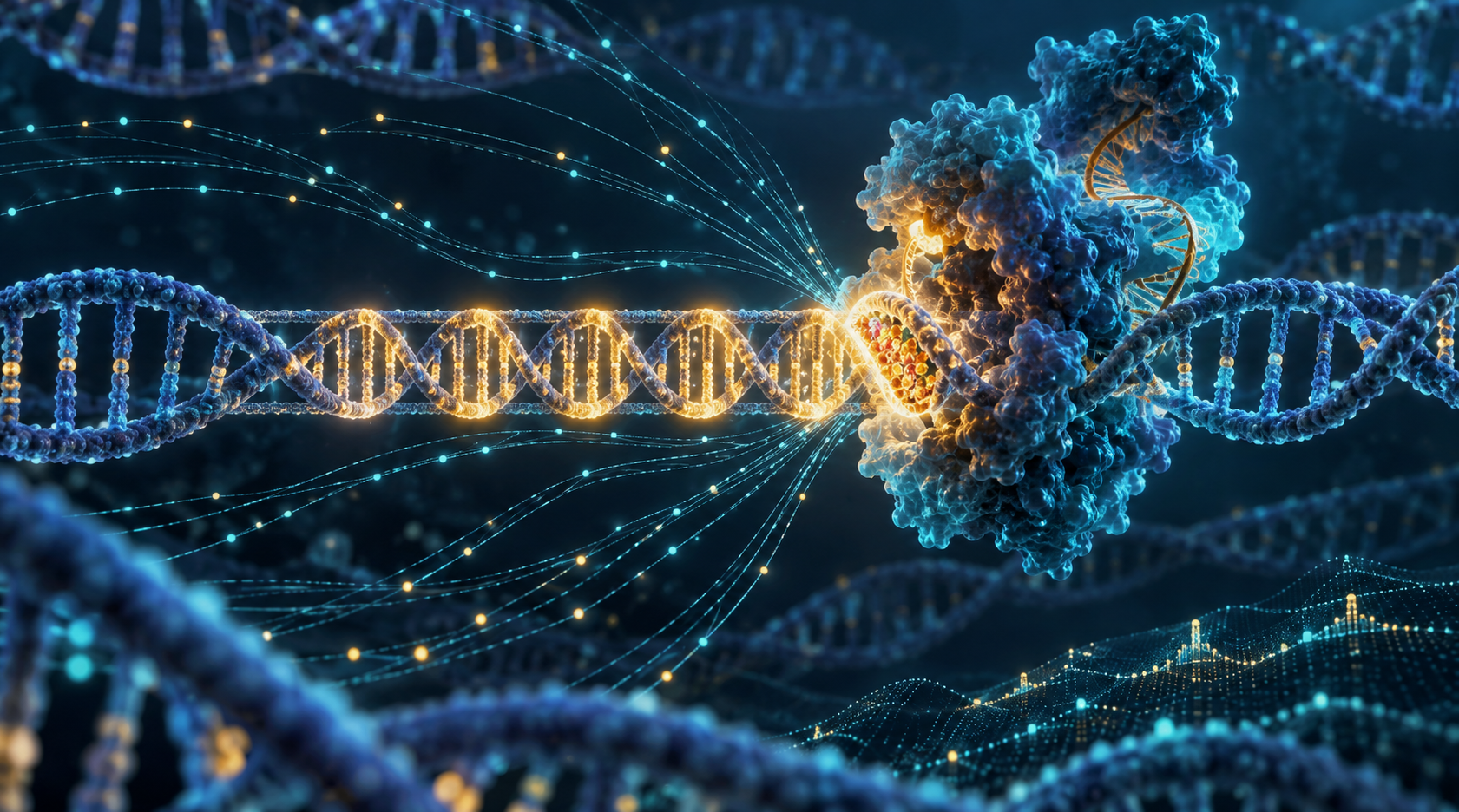
Anthropic says a large Claude-agent search found a previously uncharacterized biological system built around a reverse transcriptase, a neighboring protein, and a regular array of DNA repeats. The company calls the system array-associated reverse transcriptases, or ART. Its layout has features reminiscent of CRISPR, but Anthropic explicitly says ART’s primary biological function is not yet known.
The September 23 report reached 567 points and 588 comments on Hacker News by our September 24 check. The reaction reflects unusually high interest. It does not convert an early preprint or company announcement into a replicated discovery.
What happened
Anthropic formed an internal life-sciences research group and wet lab in spring 2026. Scientists gave Claude a high-level task: search a large DNA database for interesting reverse-transcriptase systems. Roughly 950 agents ran for 21 hours and consumed 210 million tokens, according to the company.
The agents gathered more than 200,000 reverse transcriptases, identified about 3,500 candidate systems, and narrowed those to 20 detailed reports. One agent noticed a regular tandem-repeat array beside an unusual reverse-transcriptase gene. It compared the spacing with known systems, searched prior literature, and submitted the candidate for human review.
Anthropic’s scientists then performed the physical experiments. Their early work indicates that the array is expressed as distinct short RNAs. The system appears mainly in bacteriophages and combines the reverse transcriptase, an accessory gene, and the repeat array. Those observations support the claim that the genomic neighborhood is a coherent system. They do not yet establish what it does.
Why it matters
Genome mining contains an enormous filtering problem. Sequence databases hold many proteins with unknown functions and many genomic neighborhoods that do not match a named mechanism. A researcher can spend weeks moving from a protein family to unusual neighbors, literature checks, evolutionary comparisons, and a short list worth testing.
Claude’s apparent contribution was not inventing an enzyme from scratch. It searched, clustered, compared, rejected, and escalated an anomaly that already existed in public biological data. That distinction makes the result more credible and more useful. Agents may be strongest as scalable readers and triage systems that help experts decide where scarce laboratory time should go.
The work also shows what “autonomous discovery” should mean operationally. Software can run the computational search and propose a mechanism. Scientists still choose the problem, inspect the report, design experiments, work in the laboratory, interpret ambiguous results, and decide what is ready to publish.
Evidence
Anthropic provides an unusually concrete execution record: the approximate number of agents, run time, token use, size of the initial protein collection, number of candidates, and the surviving shortlist. It released a preprint describing the computational and experimental work rather than relying only on a product post.
The observed repeat array, associated genes, phage distribution, and short RNA expression are specific claims that other researchers can examine. The underlying reverse transcriptase had appeared in previous studies, while Anthropic claims the combined system features had not been recognized.
The evidence stops short of the most exciting interpretation. A CRISPR-like arrangement does not prove programmability, DNA cutting, copying, or editing. Anthropic says experiments are continuing. The word “discovery” is defensible for identifying and experimentally supporting an uncharacterized system; it should not be read as discovery of a ready-made gene-editing tool.
Practical takeaway
Scientific teams considering research agents should copy the funnel rather than the headline:
- start with a well-bounded dataset and a question an expert can audit;
- require the system to reproduce known results before searching for anomalies;
- preserve code, database versions, intermediate candidates, and rejection reasons;
- rank proposals by testability, novelty, and likely value—not rhetorical confidence;
- place expert review before expensive or safety-sensitive experiments;
- preregister the decisive tests where practical;
- publish negative results and model failures as well as successful examples.
The economics deserve attention. Two hundred ten million tokens and hundreds of parallel agents are not a universal recipe. The comparison should be cost per experimentally useful candidate, including scientist review and lab work, not cost per generated report.
Limitations
Anthropic is the model developer, research operator, and narrator of the result. The preprint has not completed peer review, and independent groups have not yet reproduced the findings. Exact prompts, harness decisions, candidate-scoring procedures, and the volume of unproductive analysis shape how autonomous the run really was.
Selection bias is unavoidable in a launch story. We see the successful campaign, not a complete ledger of agent searches that found nothing or produced misleading hypotheses. Without that denominator, it is difficult to estimate reliability.
Biological significance remains open. Expression of short RNAs is intriguing, but function, mechanism, evolutionary role, and potential biotechnology use need direct evidence. The work used lower biosafety-level research and human-run lab procedures; it should not be generalized into permission for models to conduct unrestricted biological experimentation.
Final verdict
ART is a serious early result because the claim is narrow, the computational search is documented, and human experiments support the existence of an unusual system. The important achievement is scalable anomaly detection joined to a real validation loop. The important restraint is equally clear: Claude helped find a promising biological object, not a finished CRISPR successor.
Sources
> Want more like this?
Get the best AI insights delivered weekly.
By subscribing, you agree to our Privacy Policy. You can unsubscribe at any time.
> Related Articles
AI Science Agents Need an Evidence Ladder, Not a Discovery Score
Anthropic's ART result, Google's AI co-scientist, and published laboratory validations show a common pattern: agents can widen hypothesis search, but experiments determine what survives.
Gemini 3.8 TTS Turns Voice Design Into a Prompt
Google's new Flash and Flash-Lite speech models add custom voices, line-level direction, and consent checks. The real product shift is from choosing a preset to managing a performance system.
GPT-6 Sol, Luna, and Claude Opus 5.5 Make Routing the New Model Moat
OpenAI and Anthropic are competing on cost per completed task, while Stripe and Strands show why model choice is becoming a runtime policy rather than a product identity.
Tags
> Stay in the loop
Weekly AI tools & insights.