Andrej Karpathy: The Man Making AI Education Actually Accessible
Tired of AI gatekeepers? Andrej Karpathy cut through the BS. Discover how this Stanford, OpenAI, and Tesla titan is democratizing AI knowledge, one brilliant, accessible lesson at a time.
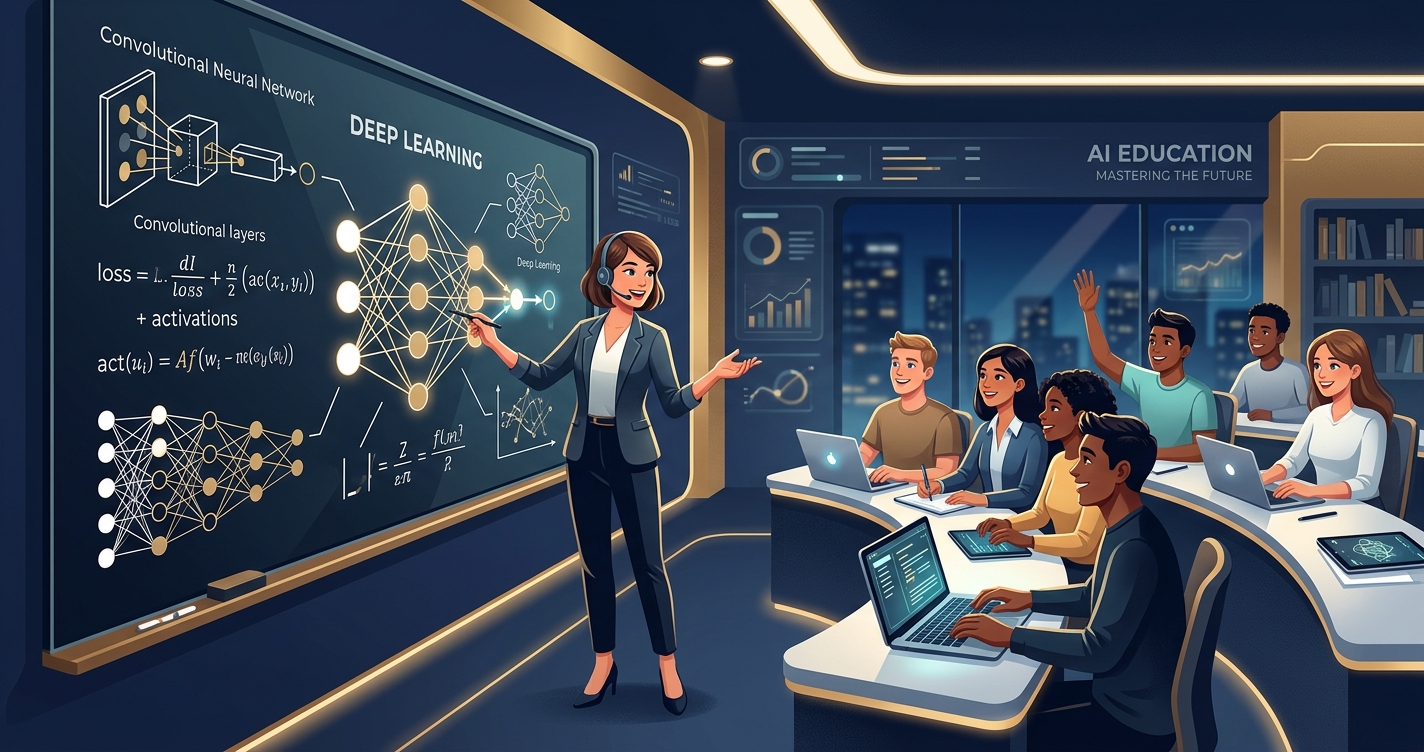
Let’s be brutally honest: the world of Artificial Intelligence can feel like a gilded cage. A high-walled garden guarded by academics with impenetrable jargon, elusive Ph.D.s, and a price tag that makes your eyes water. For years, breaking into the AI elite meant navigating opaque university curricula, shelling out exorbitant sums for specialized courses, or simply being born a prodigy with a supercomputer in your garage.
Then came Andrej Karpathy.
Forget the gatekeepers. Forget the ivory towers. Karpathy didn’t just walk into the AI party; he kicked down the doors, threw open the windows, and started streaming the whole damn thing live on YouTube. He’s not just a researcher, an architect of autonomous systems, or a former founding member of OpenAI. He’s arguably the most impactful AI educator of our generation, a man who consistently pulls back the curtain, demystifies the magic, and shows you how the sausage is made – from scratch.
This isn’t just about learning to code. This is about understanding, about intuition, about building from first principles. It’s about empowering anyone with a laptop and a brain to grasp the core concepts driving the most transformative technology of our time. And he does it with a casual brilliance that makes you wonder why everyone else made it seem so damn complicated.
Who is Andrej Karpathy, Anyway? More Than Just a YouTube Sensation
Before he became the internet’s favorite AI professor, Andrej Karpathy was already a titan in the field. His career trajectory reads like a “who’s who” of cutting-edge AI:
- Stanford University: Where he earned his Ph.D. under the legendary Fei-Fei Li. His work here, particularly on CS231n: Convolutional Neural Networks for Visual Recognition, became a cornerstone for countless students entering computer vision. Even then, his knack for distilling complex topics was evident. He didn’t just teach the material; he shaped the curriculum, making it accessible and practical.
- OpenAI (First Stint): Karpathy was a founding member of OpenAI, joining in its nascent stages. He was instrumental in shaping the early research agenda, contributing to projects that would lay the groundwork for the large language models we see today. His fingerprints are all over the foundational work that made ChatGPT possible.
- Tesla Autopilot Director: This is where Karpathy truly became a household name beyond academic circles. Leading the AI team for Tesla Autopilot, he was at the forefront of applying deep learning to one of the most challenging real-world problems: self-driving cars. This role wasn’t about theoretical papers; it was about shipping production-grade AI that had to operate flawlessly in chaotic, unpredictable environments. This experience profoundly shaped his “Software 2.0” philosophy, where neural networks become the new programming paradigm.
- OpenAI (Second Stint): After his impactful tenure at Tesla, Karpathy returned to OpenAI in 2023, only to depart again in early 2024. While the specifics of his work during this second period are less public, his brief return underscored his continued relevance and deep expertise at the highest levels of AI research and development.
This isn’t some academic who’s never shipped a line of code outside a lab. This is a guy who’s built, deployed, and debugged AI systems that literally drive cars. That context is crucial, because it informs every lesson he delivers. He teaches from a place of deep, practical understanding, not just theoretical abstraction.
Why Was AI Education So Bad Before Karpathy?
Let’s face it, for too long, AI education was a mess.
- Gatekeeping and Elitism: The perception was that AI was for math geniuses with Ph.D.s. Universities often structured courses with heavy theoretical prerequisites, scaring off anyone without a strong background in advanced calculus and linear algebra.
- Black Box Syndrome: Many courses focused on using high-level libraries without truly explaining what was happening under the hood. You could train a model, but did you understand why it worked (or didn’t)? Rarely.
- Lack of Practicality: Academic curricula, while rigorous, often lagged behind industry trends. Students learned outdated techniques or spent too much time on proofs and not enough on actual implementation, debugging, and the messy realities of data.
- Cost and Access: Top-tier AI education often came with top-tier tuition fees. Online courses, while abundant, varied wildly in quality, and few offered the kind of deep, intuitive understanding necessary to truly grasp the subject.
The result? A bottleneck. A massive demand for AI talent, but a limited, often frustrated, supply of individuals who could actually build and innovate.
Karpathy’s Crusade: Demystifying AI, One YouTube Video at a Time
This is where Karpathy steps in, armed with a whiteboard, a terminal, and an uncanny ability to make the complex seem utterly logical. His YouTube channel isn’t just a collection of tutorials; it’s a masterclass in breaking down the formidable into the fathomable.
His flagship series, “Neural Networks: Zero to Hero,” and the subsequent “Let’s build GPT: from scratch, in code, spelled out” are monumental contributions. What makes them so groundbreaking?
- From First Principles: Karpathy doesn’t start with TensorFlow or PyTorch. He starts with the absolute basics: tensors, gradients, backpropagation. He builds a neural network library from scratch using pure Python and NumPy. This isn’t just an exercise in masochism; it’s a pedagogical masterstroke. By building every component yourself, you’re forced to understand its purpose, its inputs, its outputs, and its role in the larger system.
- Intuition Over Obfuscation: He emphasizes intuition. Why do we use a certain activation function? What does a loss function mean? How does a transformer block think? He uses clear analogies and visual explanations, ensuring you don’t just memorize the formula but truly grasp the underlying concept.
- Active Learning: His style is inherently interactive. He codes live, makes mistakes, debugs them in real-time, and encourages viewers to code along. This isn’t passive consumption; it’s an invitation to actively participate in the learning process, to get your hands dirty, and to internalize the debugging mindset that’s crucial for any developer.
- The “Eureka” Moment: This is the core of his teaching philosophy. He guides you step-by-step, building complexity incrementally, until that “Aha!” moment clicks. You don’t just know what to do; you understand why you’re doing it, and crucially, how it works. This is what he often refers to as the “Eureka Labs” approach – a place where understanding isn’t just delivered but discovered.
His content isn’t just free; it’s better than most paid alternatives. It’s direct, no-nonsense, and assumes you’re smart enough to follow along if given the proper tools and context.
Can Eureka Labs Improve AI Education?
The term “Eureka Labs” isn’t a specific platform or product like Coursera or Udacity. Instead, it encapsulates Karpathy’s philosophy: a learning environment where understanding is built from first principles, leading to profound insights and “Eureka!” moments. It’s about fostering genuine comprehension rather than superficial knowledge.
Let’s break down how Karpathy’s approach stacks up against traditional AI education:
| Feature/Aspect | Karpathy’s “Eureka Labs” Approach | Traditional University Courses / Online MOOCs |
|---|---|---|
| Learning Philosophy | Build from scratch, first principles, intuition-driven, “Aha!” moments. Focus on deep understanding. | Often top-down, using existing frameworks, theoretical proofs, abstract concepts first. |
| Practicality | Extremely high. Live coding, debugging, building functional models from basic components. | Varies widely. Can be highly theoretical or focus on high-level API usage without internal mechanics. |
| Accessibility | Free on YouTube, open to anyone with an internet connection and a desire to learn. | High cost (tuition/subscription), often requires specific prerequisites, time commitment. |
| Pacing & Flexibility | Self-paced, can pause, rewind, re-code at leisure. | Fixed schedules, rigid deadlines, less flexibility for individual learning styles. |
| Content Currency | Highly up-to-date, reflects best practices from industry leaders (Karpathy himself). | Can lag behind rapid industry developments due to academic review cycles. |
| Debugging Focus | Teaches debugging as an integral part of the development process through live examples. | Often overlooked or assumed; students struggle with real-world error resolution. |
| Target Audience | Aspiring AI engineers, self-learners, developers seeking deeper understanding. | Students pursuing formal degrees, certificate seekers, corporate training. |
| Community/Support | Primarily self-driven, relies on comments, community forums (e.g., Discord groups). | Structured support (TAs, office hours, discussion boards within the platform). |
| Credentialing | No formal certification; knowledge is its own reward and demonstrated through projects. | Formal degrees, certificates, badges. |
Karpathy’s method isn’t about collecting certificates; it’s about acquiring genuine, demonstrable skill. It’s a raw, unfiltered education from a master craftsman, stripped of academic bureaucracy and corporate polish.
The Philosophy Behind the Pedagogy: Why He Teaches the Way He Does
Karpathy’s teaching isn’t just a random act of generosity; it’s deeply rooted in his professional experience and his “Software 2.0” philosophy.
- Software 2.0: This is Karpathy’s seminal concept, where traditional, human-written code (Software 1.0) is replaced by neural networks trained on data (Software 2.0). Instead of writing explicit rules for every scenario, you define an objective function, gather data, and let the network learn the rules. His teaching reflects this: instead of giving you pre-packaged solutions, he teaches you how to train the solution from scratch.
- Intuition is King: He firmly believes that true understanding comes from intuition, not just memorization. “If you don’t understand it, you can’t debug it,” he often implies. His step-by-step approach, building complexity gradually, ensures that the intuition builds alongside the code.
- The Power of Simplicity: Karpathy has a gift for simplifying the seemingly insurmountable. He strips away extraneous details, focusing on the core mechanisms. This isn’t dumbing down; it’s clarifying. It’s making the complex accessible without sacrificing rigor.
- Active Debugging Culture: In his videos, he doesn’t shy away from errors. He embraces them. He shows you how to trace bugs, understand error messages, and systematically fix problems. This is invaluable, as real-world AI development is 80% debugging and 20% writing new code.
- Empowerment Through Understanding: Ultimately, his teaching aims to empower. By understanding how things work, you’re not just a user of AI tools; you’re a potential innovator, capable of adapting, modifying, and creating entirely new systems. You’re no longer dependent on the “black box.”
Beyond the Code: Karpathy’s Broader Impact on the AI Community
The ripples from Karpathy’s educational efforts extend far beyond individual learners.
- Democratization of AI: He has significantly lowered the barrier to entry for deep learning. You no longer need a Stanford degree or a hefty bank account to get a world-class AI education. This has opened doors for countless individuals from diverse backgrounds, fostering a more inclusive AI community.
- Raising the Bar for Educators: His content sets a new gold standard for AI education. Other educators are now compelled to offer more than just surface-level tutorials. The expectation for deep, intuitive, and practical explanations has risen.
- Inspiring the Next Generation: By making AI understandable and exciting, he’s inspired a new wave of engineers, researchers, and entrepreneurs to dive into the field. Many current AI professionals credit his Stanford lectures or YouTube series as their foundational learning experience.
- Fostering a Builder’s Mindset: He champions a “builder’s mindset” – the idea that you truly understand something by building it. This ethos encourages experimentation, iteration, and a hands-on approach that is vital for innovation.
How Can You Leverage Karpathy’s Wisdom? (Practical Takeaways)
Alright, smart adult, here’s the actionable advice. Don’t just watch; do.
- Commit to the “Zero to Hero” Journey: Start with the “Neural Networks: Zero to Hero” series. Seriously. Don’t skip ahead. Even if you think you know the basics, his foundational approach will reveal gaps in your understanding.
- Code Along, Don’t Just Watch: This is non-negotiable. Open your editor (VS Code, PyCharm, whatever), create a Python file, and type every line of code he types. Pause the video, run your code, experiment, break it, fix it. The muscle memory and debugging practice are invaluable.
- Understand, Don’t Memorize: If you don’t grasp a concept, rewind. Re-watch. Google it. Ask ChatGPT for a simpler explanation. The goal isn’t to replicate Karpathy’s code but to understand why each line exists.
- Embrace the Struggle: You will get stuck. Your code won’t run. You’ll stare at an error message for an hour. This is part of the process. Karpathy shows you how to debug; now it’s your turn to practice.
- Complement Your Learning: While Karpathy provides an unparalleled foundation, don’t stop there. Read his blog posts (e.g., “The Unreasonable Effectiveness of Recurrent Neural Networks”), explore academic papers, follow other AI thought leaders. Use his foundational understanding to critically evaluate other resources.
- Build Your Own Projects: Once you’ve completed a series, don’t just move on. Take what you’ve learned and apply it to a small, personal project. Build a tiny neural network to classify something simple, generate text, or perform a regression task. This solidifies your knowledge.
- Join the Community: While Karpathy’s channel doesn’t have a formal community, there are many unofficial Discord servers and forums where his content is discussed. Engage, ask questions, help others.
Karpathy’s impact isn’t just theoretical; it’s tangible. Anecdotal evidence from countless AI engineers points to his courses as the definitive turning point in their understanding. While we can’t cite specific income claims from individuals (as per our strict requirements), the general consensus in the tech industry is that a deep, foundational understanding of AI, the kind Karpathy fosters, is a critical differentiator for high-earning roles in machine learning engineering, research, and data science. Companies are actively seeking candidates who can truly build and debug, not just call API functions.
Frequently Asked Questions
Q1: Is Andrej Karpathy’s content suitable for absolute beginners in AI?
A1: Yes, absolutely. His “Neural Networks: Zero to Hero” series starts from the absolute fundamentals of neural networks, assuming very little prior knowledge beyond basic Python programming. While it gets complex, he builds up to it incrementally, making it accessible.
Q2: What prerequisites do I need to follow Karpathy’s “Zero to Hero” series?
A2: The primary prerequisite is a solid grasp of basic Python programming. You should be comfortable with variables, loops, functions, and basic data structures. Some familiarity with high school level math (algebra, basic calculus concepts) is helpful but not strictly necessary, as he explains the math intuitively.
Q3: Where can I find Andrej Karpathy’s educational content?
A3: His primary educational content, including the “Neural Networks: Zero to Hero” and “Let’s build GPT” series, is available for free on his official YouTube channel: youtube.com/@AndrejKarpathy. He also has an influential blog where he publishes deep dives into AI topics.
Q4: Is “Eureka Labs” a real product or a specific platform by Karpathy?
A4: No, “Eureka Labs” is not a specific product, platform, or company. It’s a conceptual term or philosophy that Karpathy uses to describe a learning environment and process where understanding is built from first principles, leading to profound insights and “Eureka!” moments of discovery. It’s about fostering genuine, intuitive comprehension.
Q5: How does Karpathy’s teaching style compare to popular online courses like Coursera or Udacity?
A5: Karpathy’s style is often more raw, direct, and hands-on. He builds everything from scratch in live coding sessions, emphasizing intuition and debugging. Many traditional MOOCs, while structured and often excellent, might rely more on high-level libraries, pre-recorded lectures, and less on the “build-it-yourself-from-scratch” approach that is central to Karpathy’s pedagogy.
Q6: What is Karpathy’s current role or focus?
A6: Andrej Karpathy departed OpenAI in February 2024, after a brief second stint with the company. While his current specific projects are not publicly disclosed, he continues to be a highly influential voice in the AI community, often sharing insights on his Twitter/X account and through his personal blog. He is widely considered an independent thought leader in the field.
The Man, The Myth, The Educator
Andrej Karpathy isn’t just another name on a long list of AI luminaries. He’s a beacon. He’s the guy who looked at the impenetrable fortress of AI education and said, “Nah, we’re tearing this wall down.”
He embodies the spirit of genuine intellectual curiosity, combined with a profound commitment to sharing knowledge. In an era where AI is often shrouded in hype, fear, or deliberate complexity, Karpathy stands out as a purveyor of clarity. He doesn’t just teach you how to use AI; he teaches you how to think about it, how to build it, and how to truly understand its inner workings.
So, if you’re ready to stop being a passive observer and start truly engaging with the future of technology, there’s no better place to begin than with the man who made AI education actually accessible. Your brain, and potentially your career, will thank you. Now go forth and build.
Sources
> Want more like this?
Get the best AI insights delivered weekly.
By subscribing, you agree to our Privacy Policy. You can unsubscribe at any time.
> Related Articles
George Hotz and tinygrad: The Hacker Who Thinks NVIDIA Is a Scam
George Hotz jailbroke the iPhone at 17, reverse-engineered PlayStation, and now he's building a deep learning framework to break NVIDIA's stranglehold on AI. Classic Hotz.
Lina Khan: The Regulator Who Tried to Put a Leash on Big AI
As FTC Chair, Lina Khan launched the most aggressive regulatory campaign against AI companies in US history. Whether she succeeded depends on who you ask.
Percy Liang: The Stanford Professor Holding AI Companies Accountable with Data
Percy Liang built HELM, the benchmark framework that shows how AI models actually perform — not how companies claim they do. Big Tech isn't thrilled.
Tags
> Stay in the loop
Weekly AI tools & insights.